EDITORIAL BY AMÉLIE ADAMO, Exhibition Curator
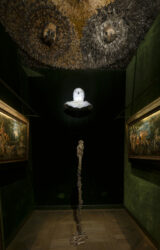
We enter Lionel Sabatté’s world as if we were sinking into a dark cavity, a cave, a primordial womb. There is something of the night, of ancient times, that resonates within it. The voice of an archaic form where realms merge, where life and death have always been intertwined, much like that famous ‘man of the well’ with a bird’s head, standing erect and reclining before a disembowelled bison, on the walls of Lascaux.
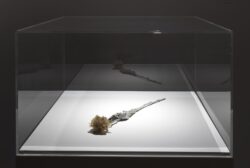
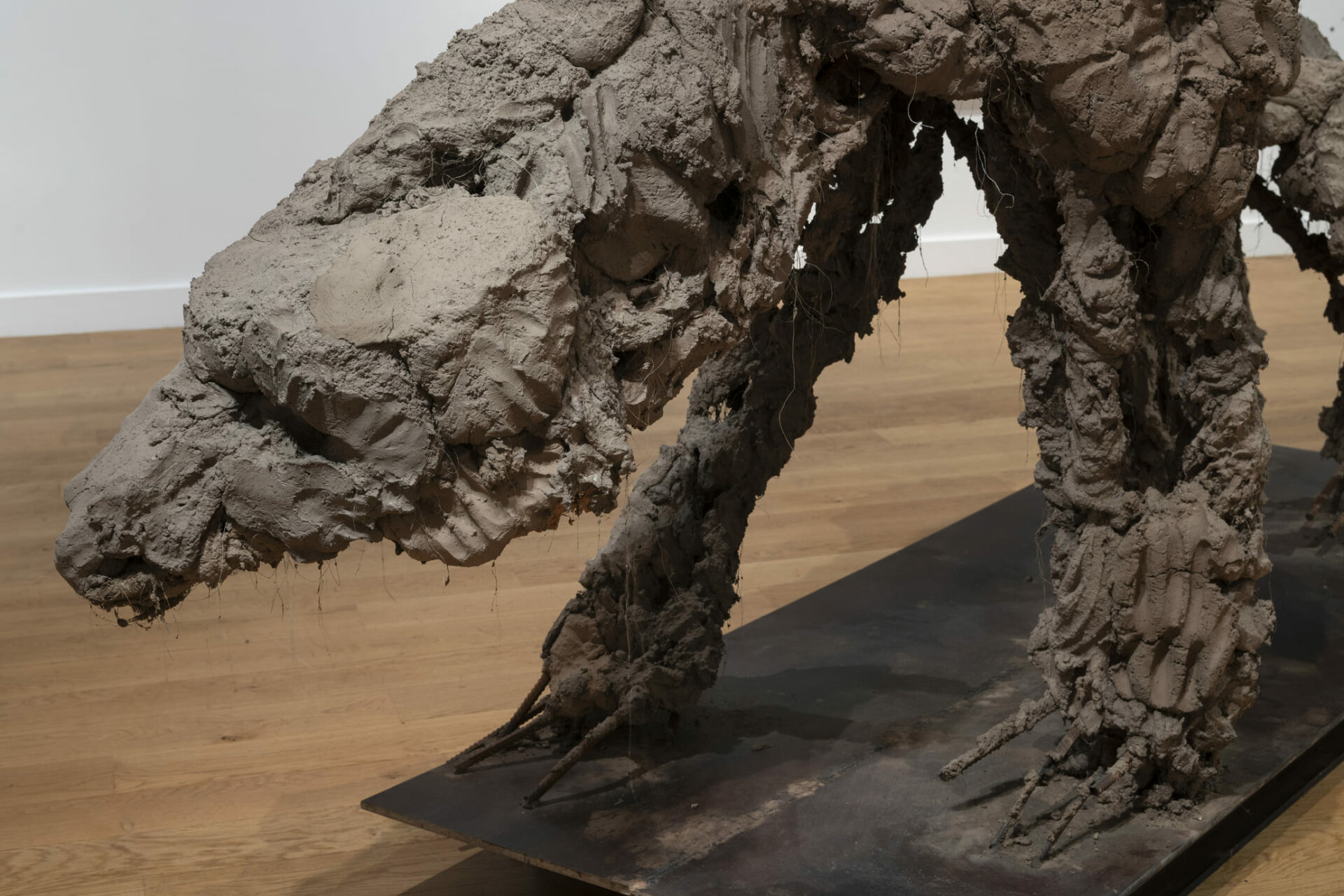
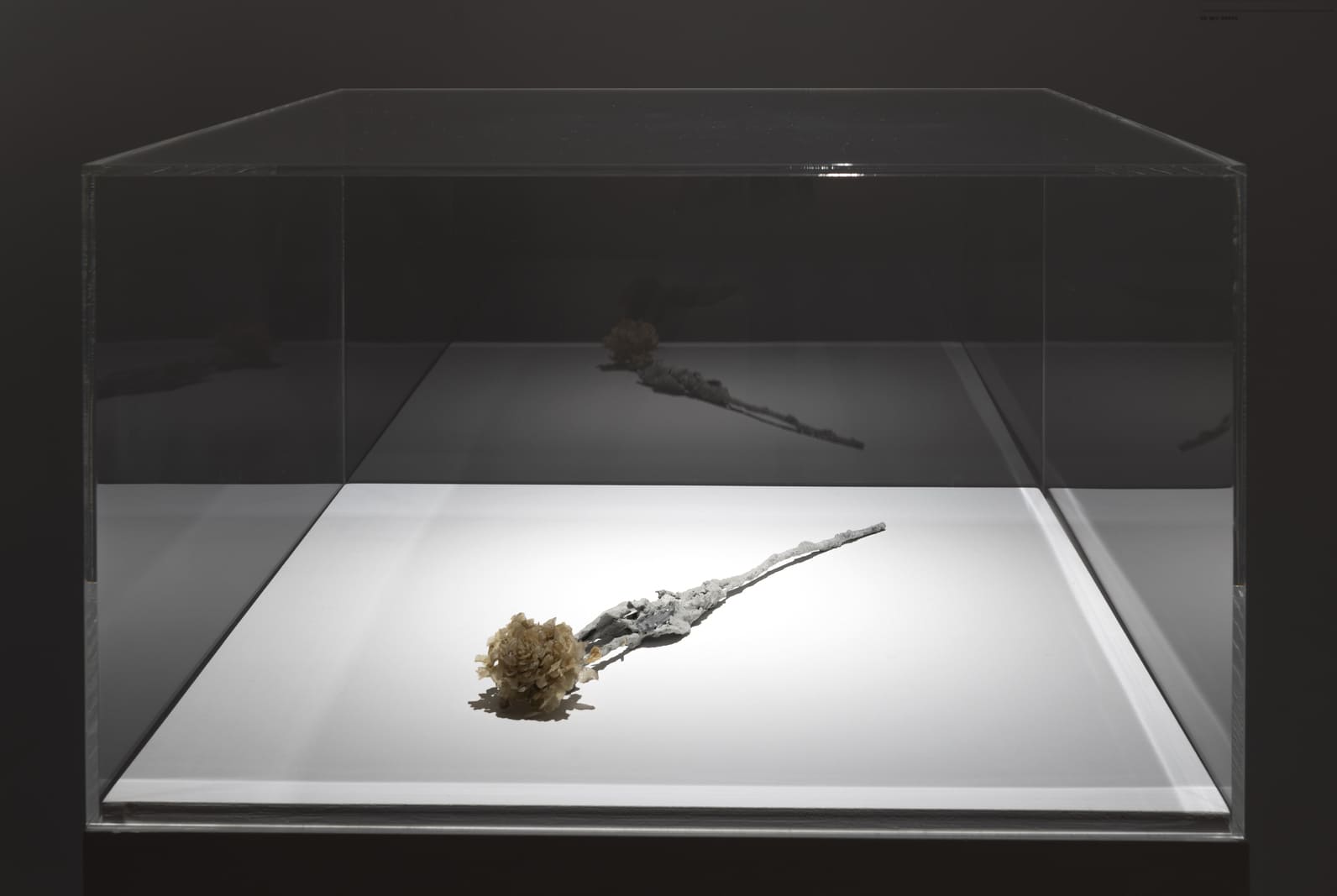
A traveller of the senses, Lionel Sabatté works with the substance of time. A time that is ageless, without chronological limits. With scents of earth and rust, deeply rooted just like the wood he uses, with a fragile decay like those remnants of fingernails, that dust he gathers, his expression seems to emerge from the crucible of life. From a primordial, formless, magmatic, organic, almost cellular source.
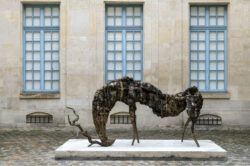
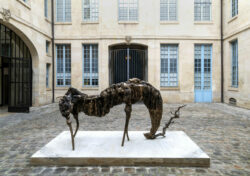
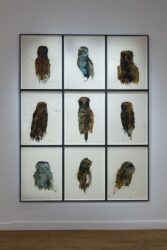
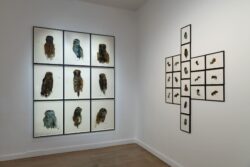
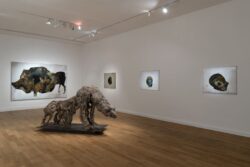
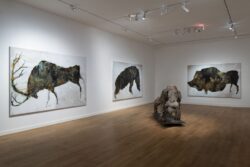
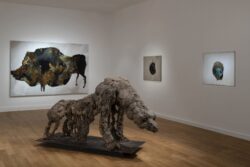
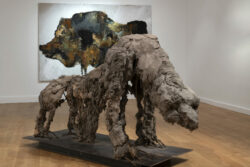
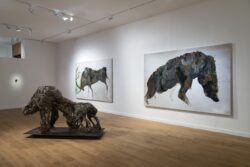
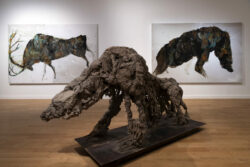
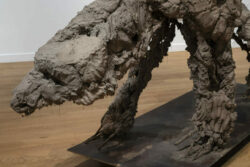
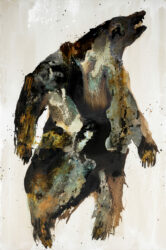
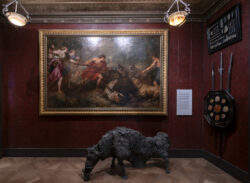
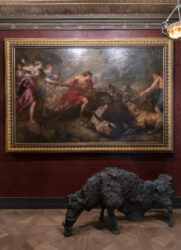
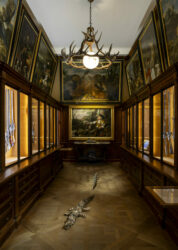
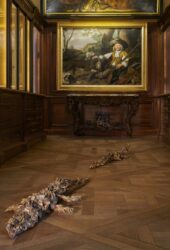
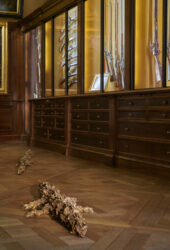
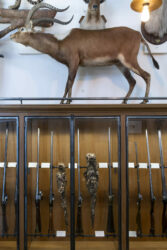
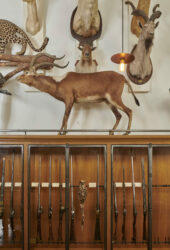
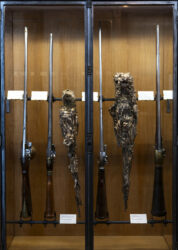
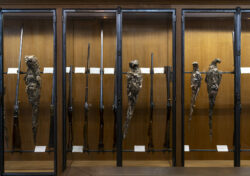
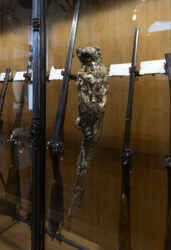
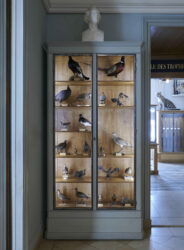
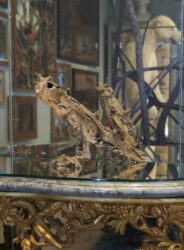
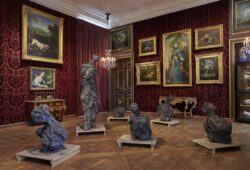
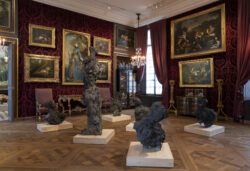
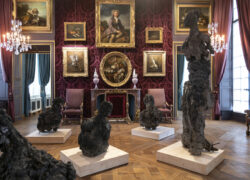
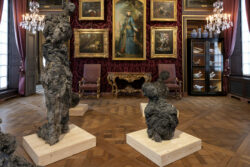
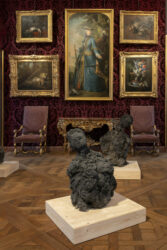
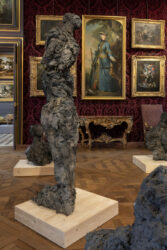
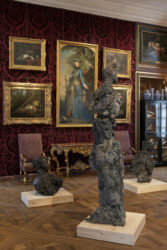
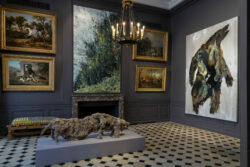
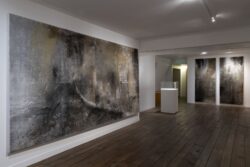
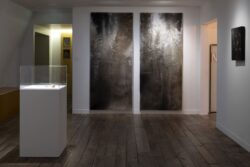
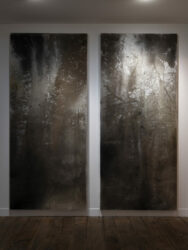
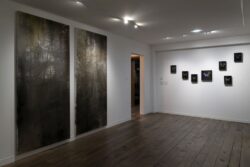
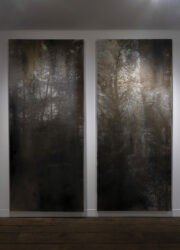
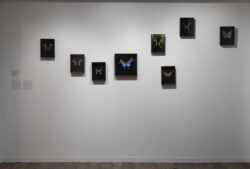
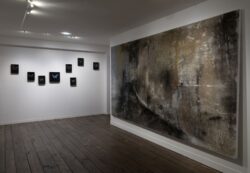
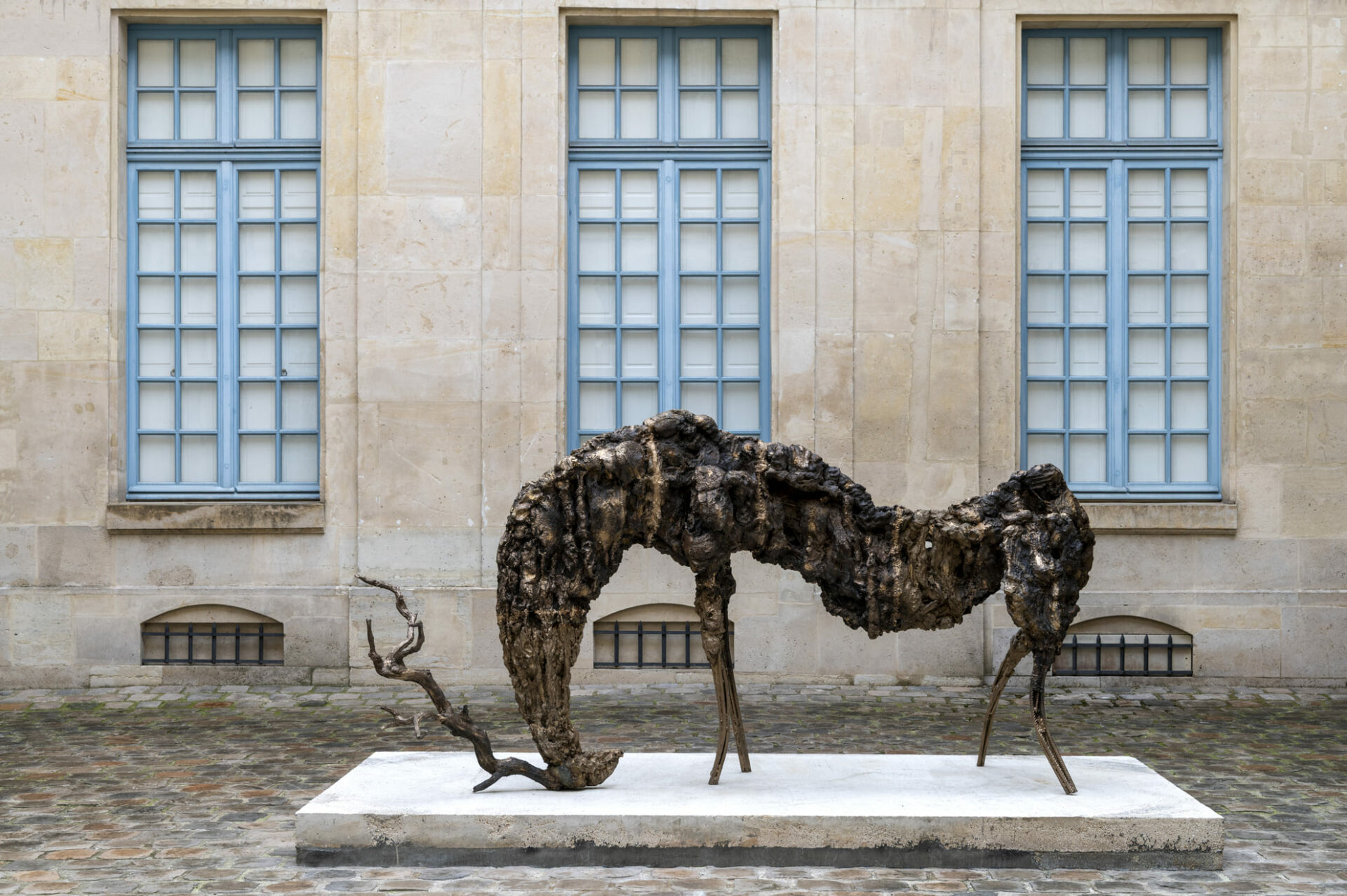
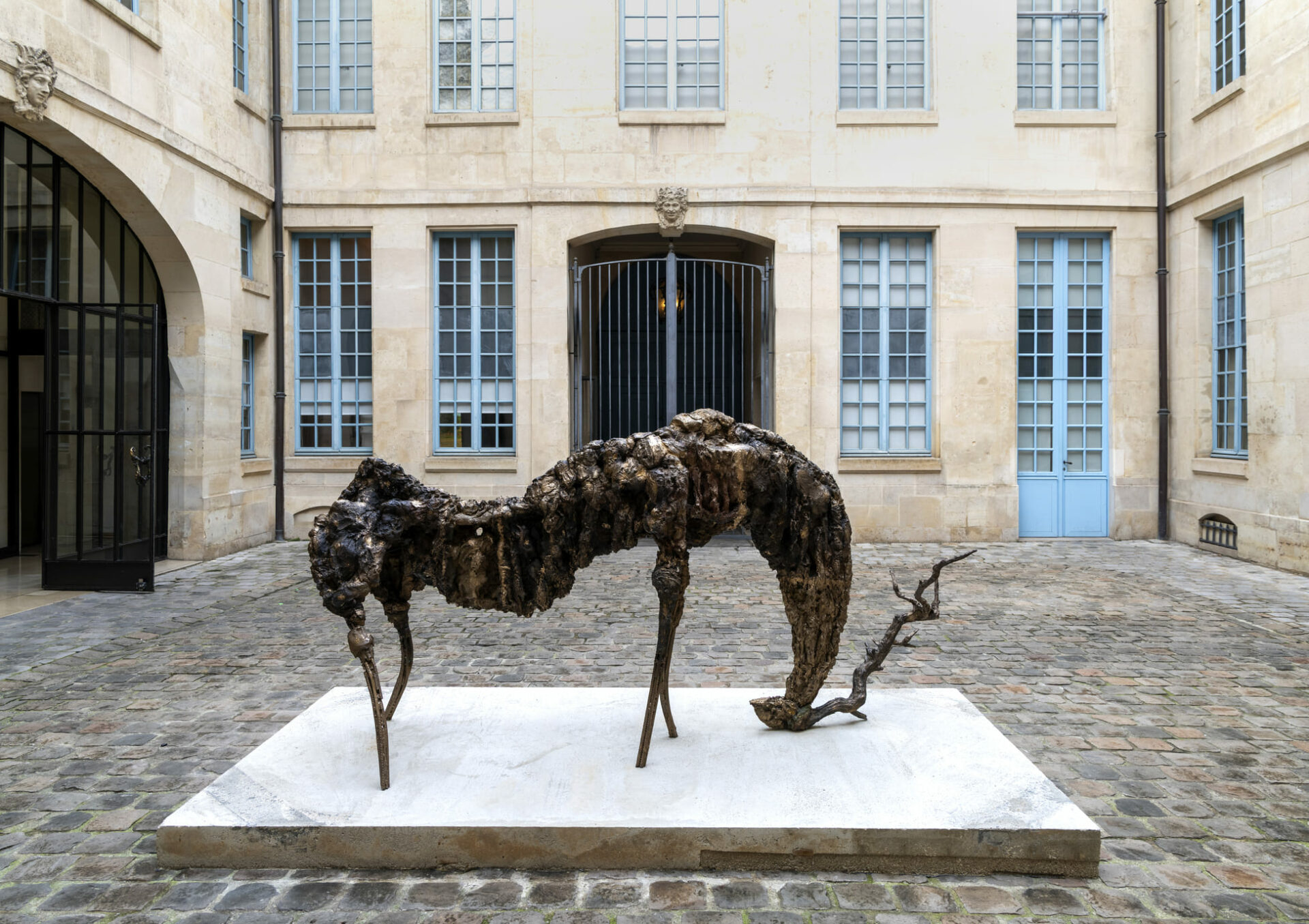
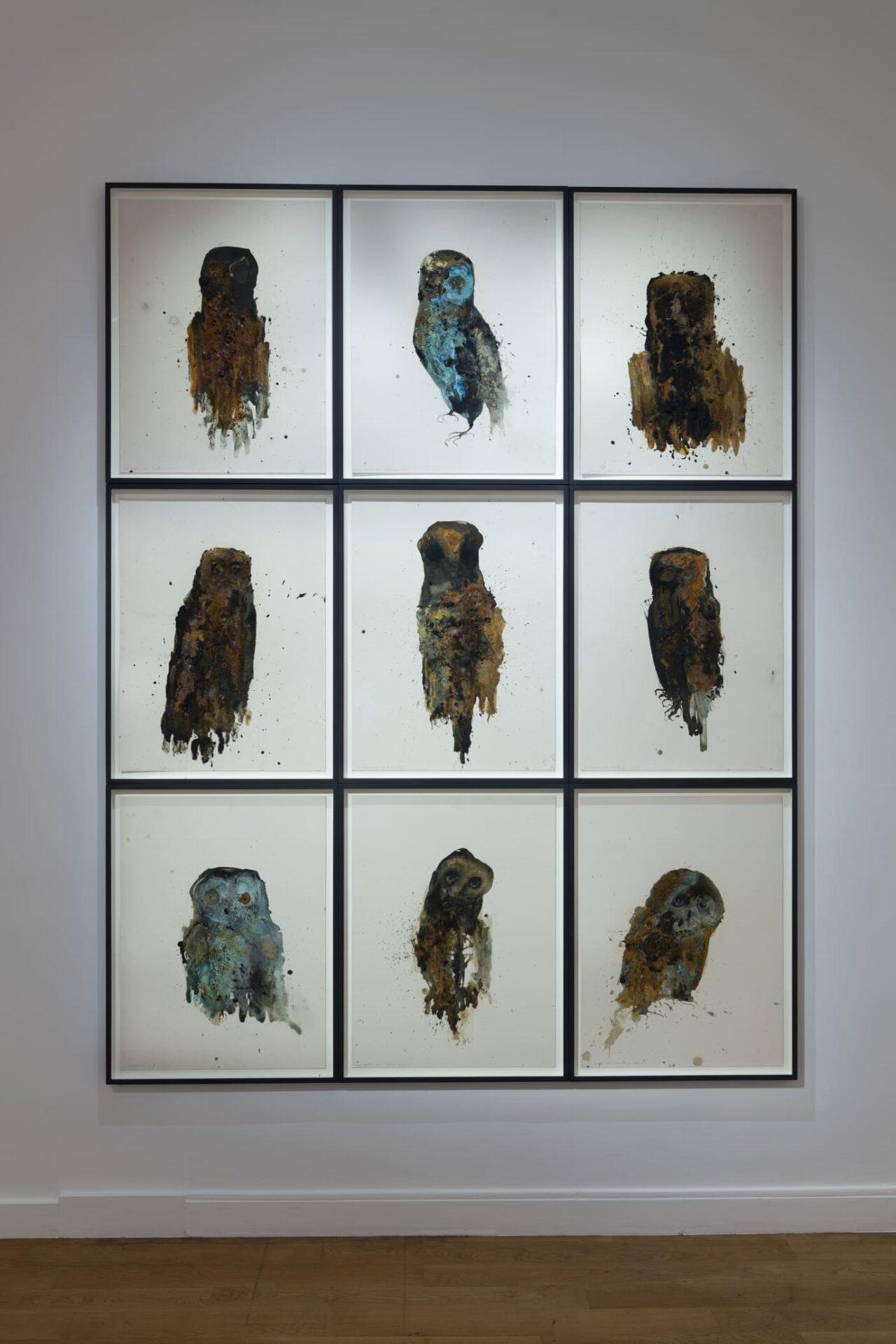
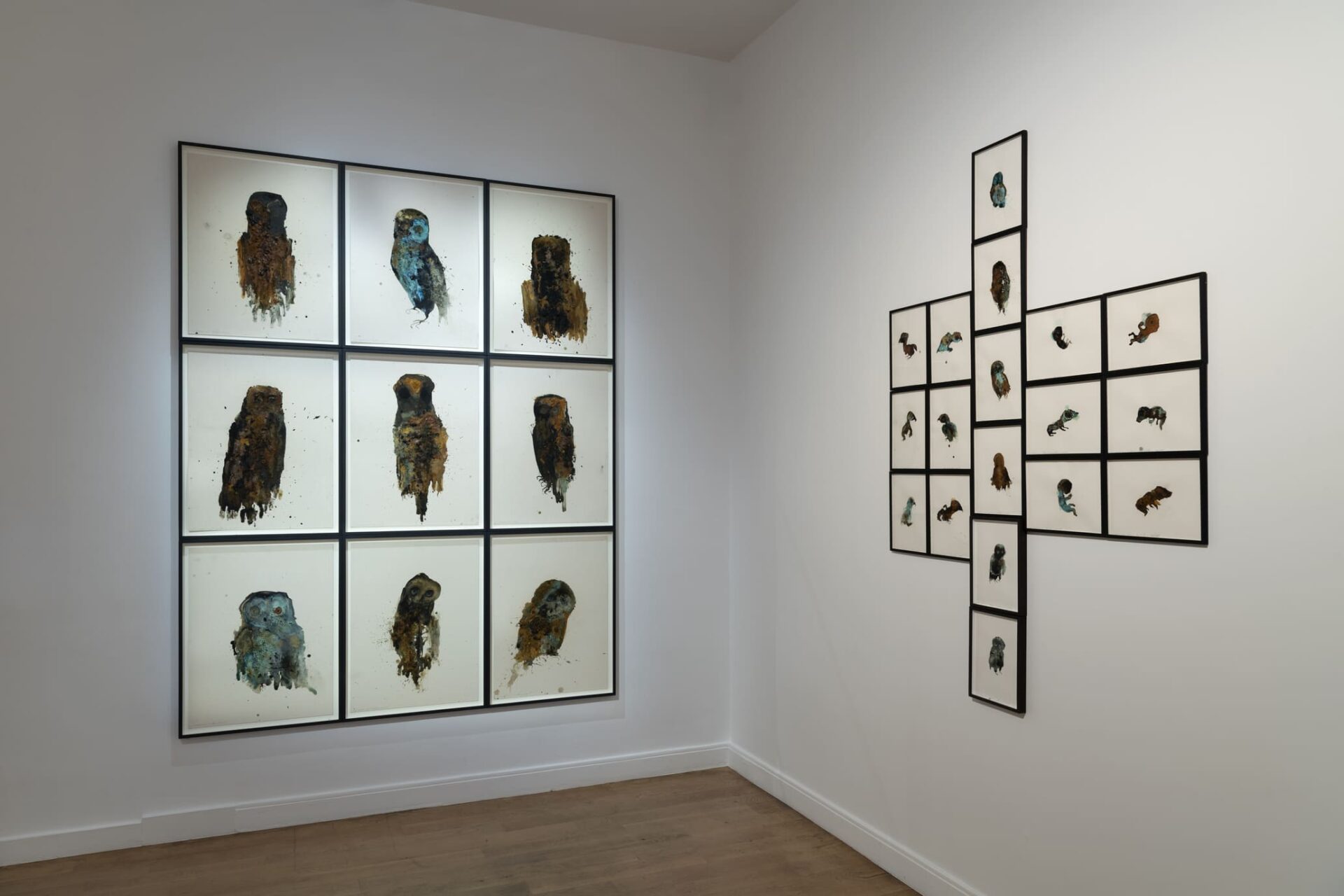
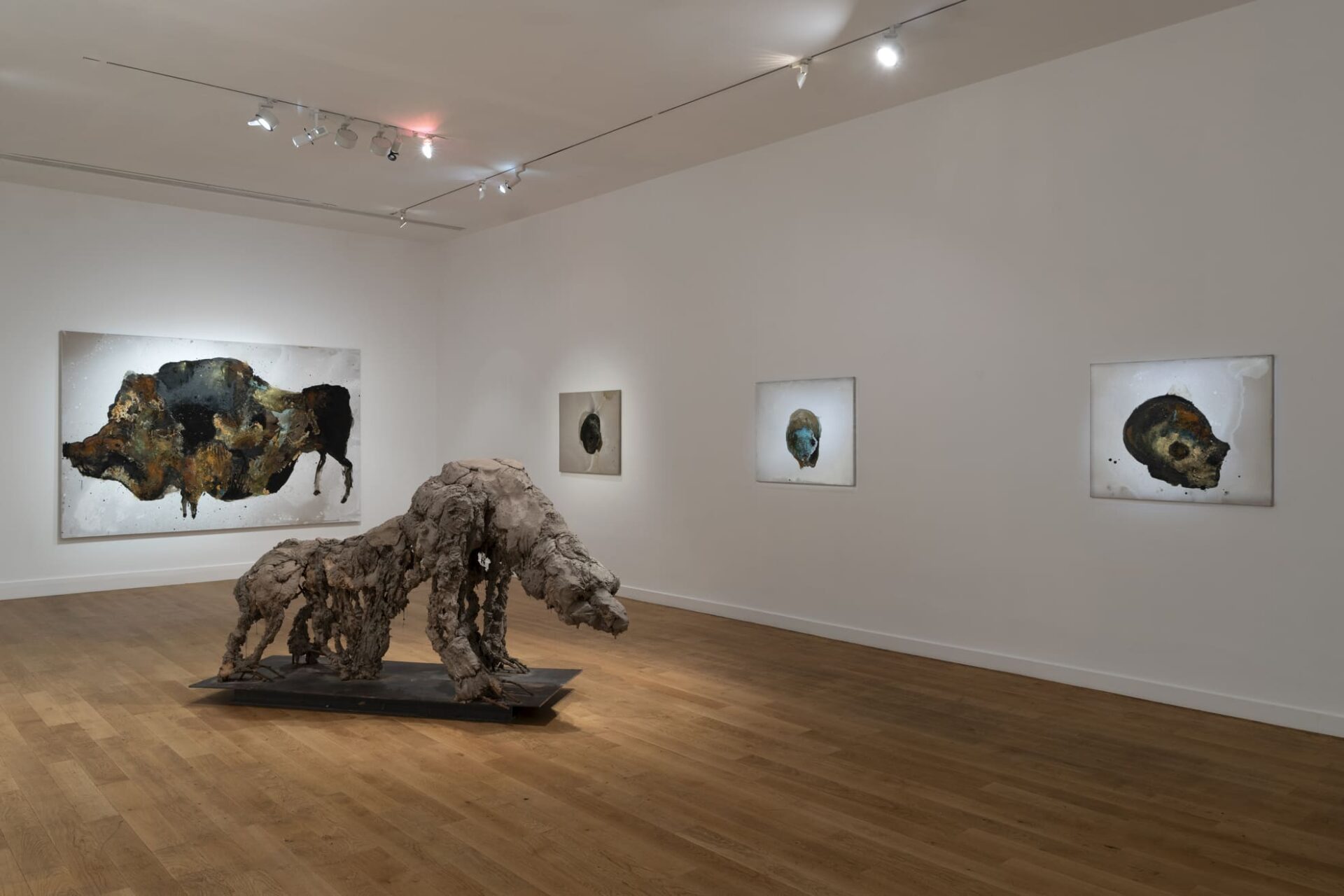
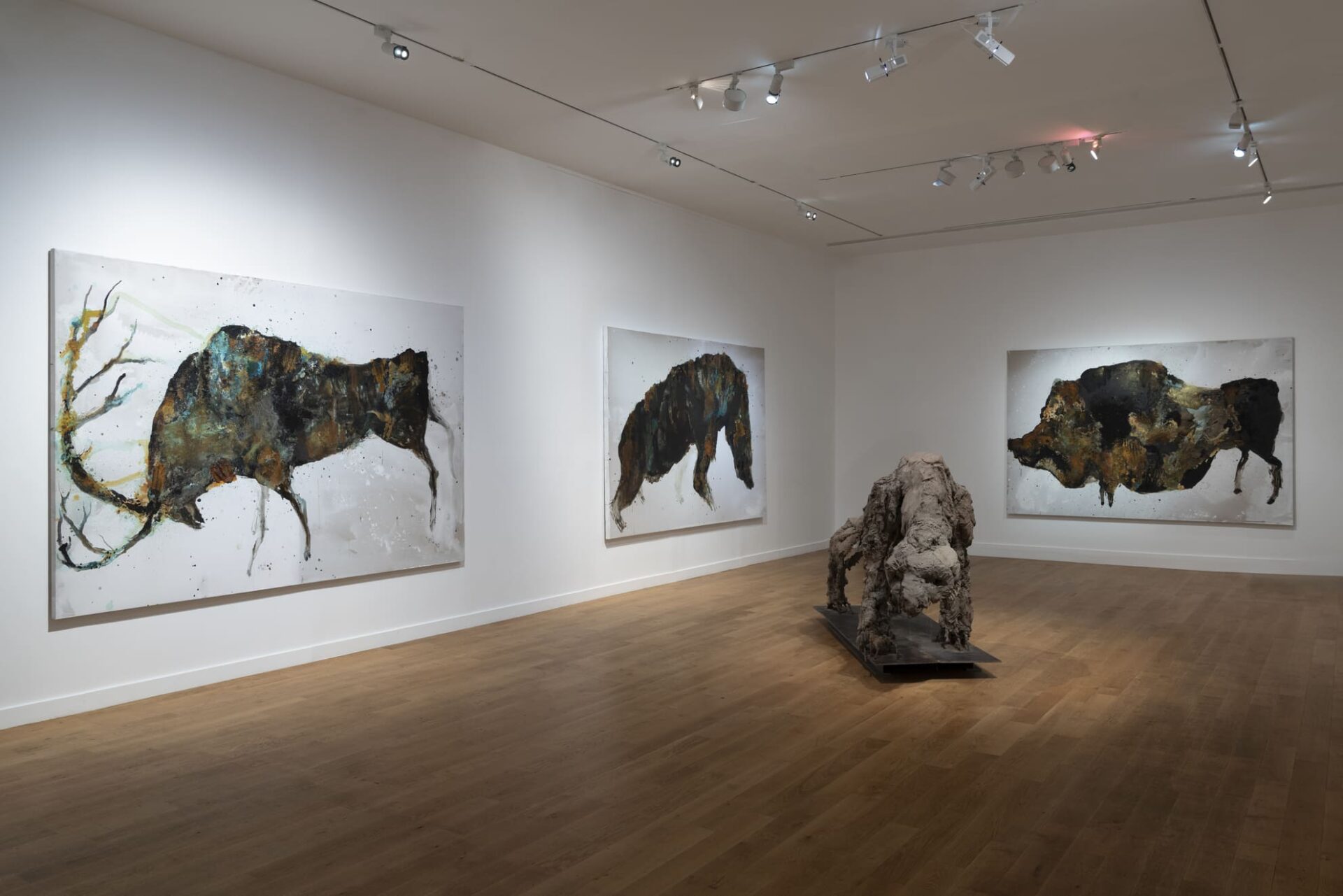
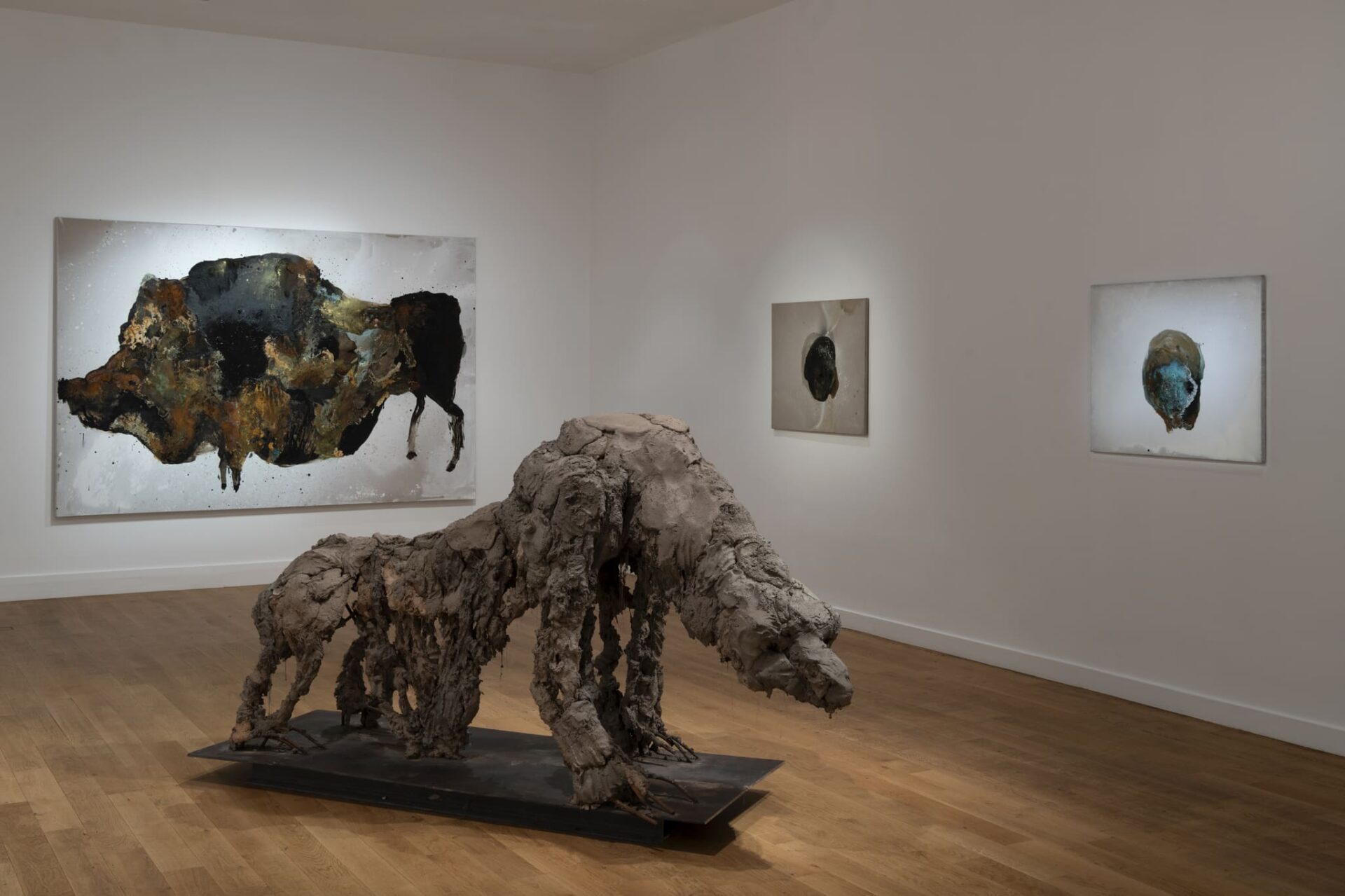
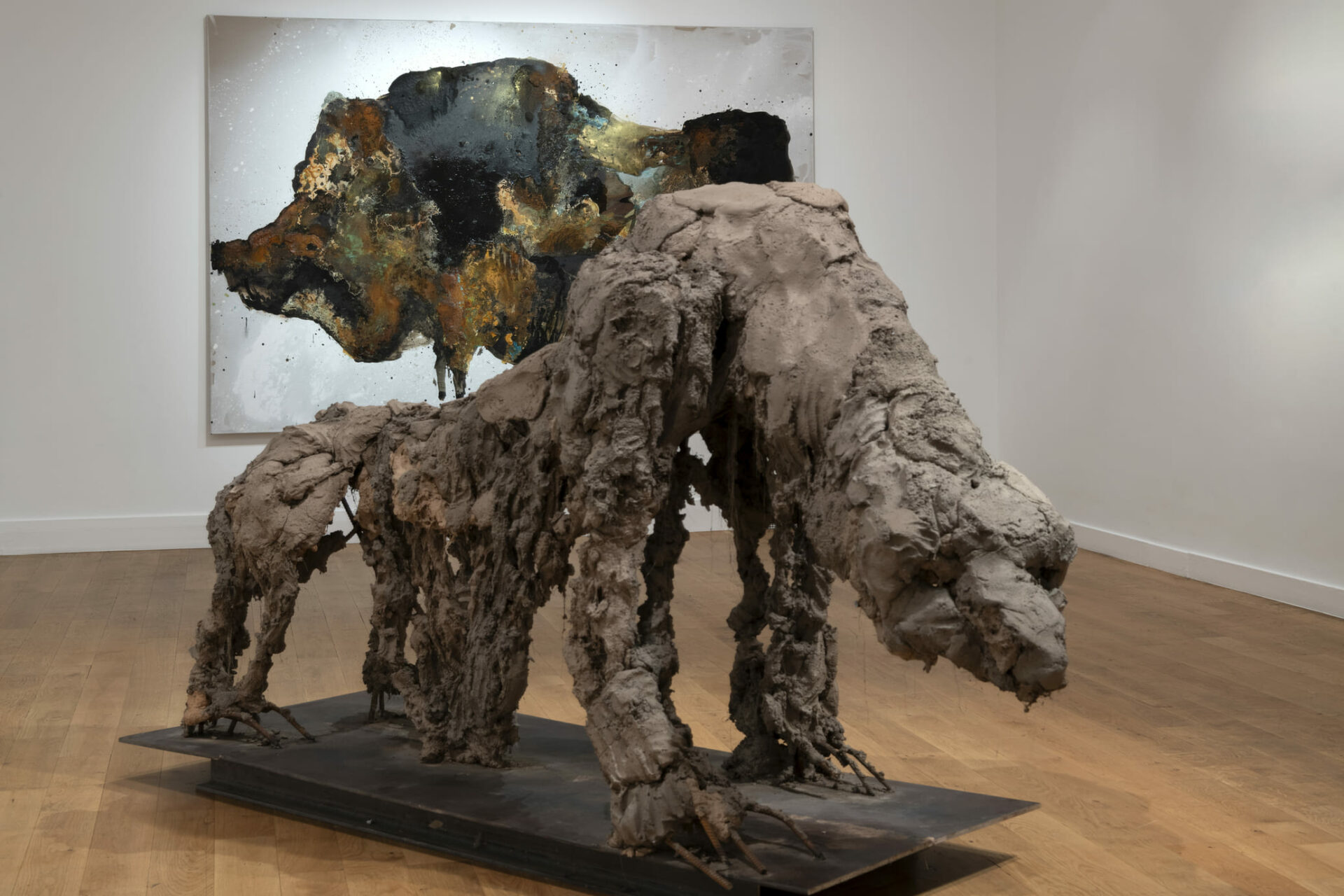
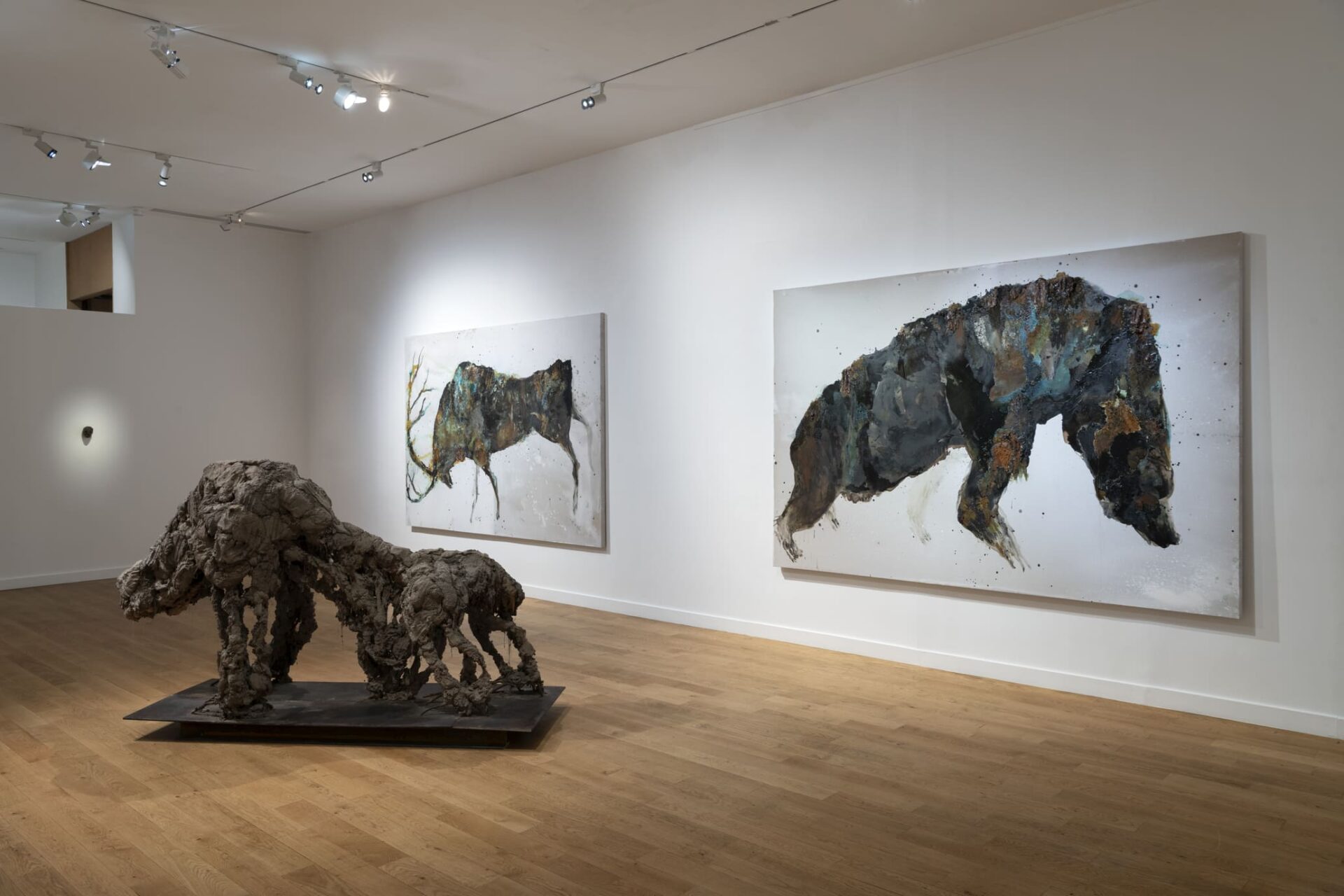
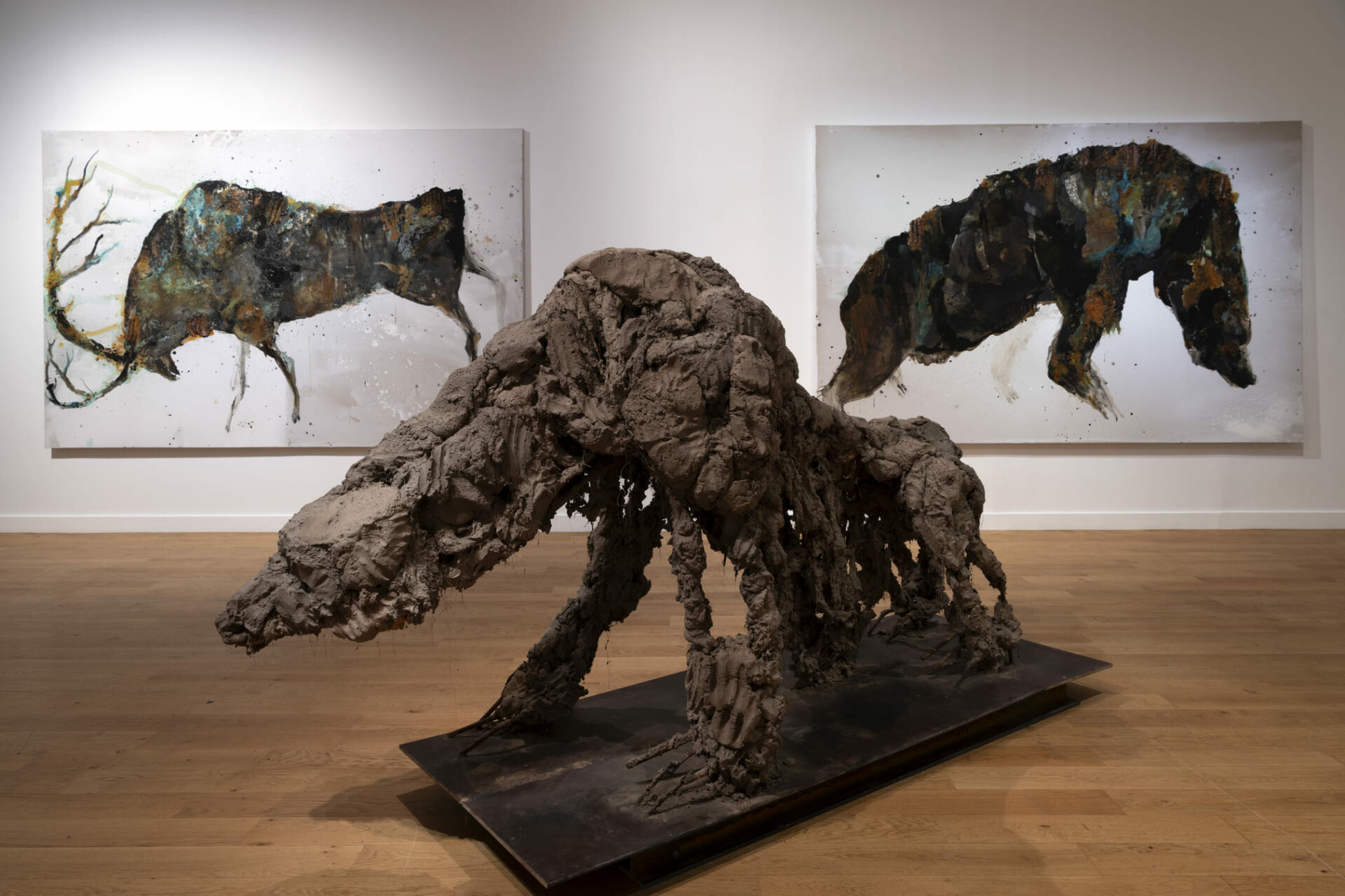
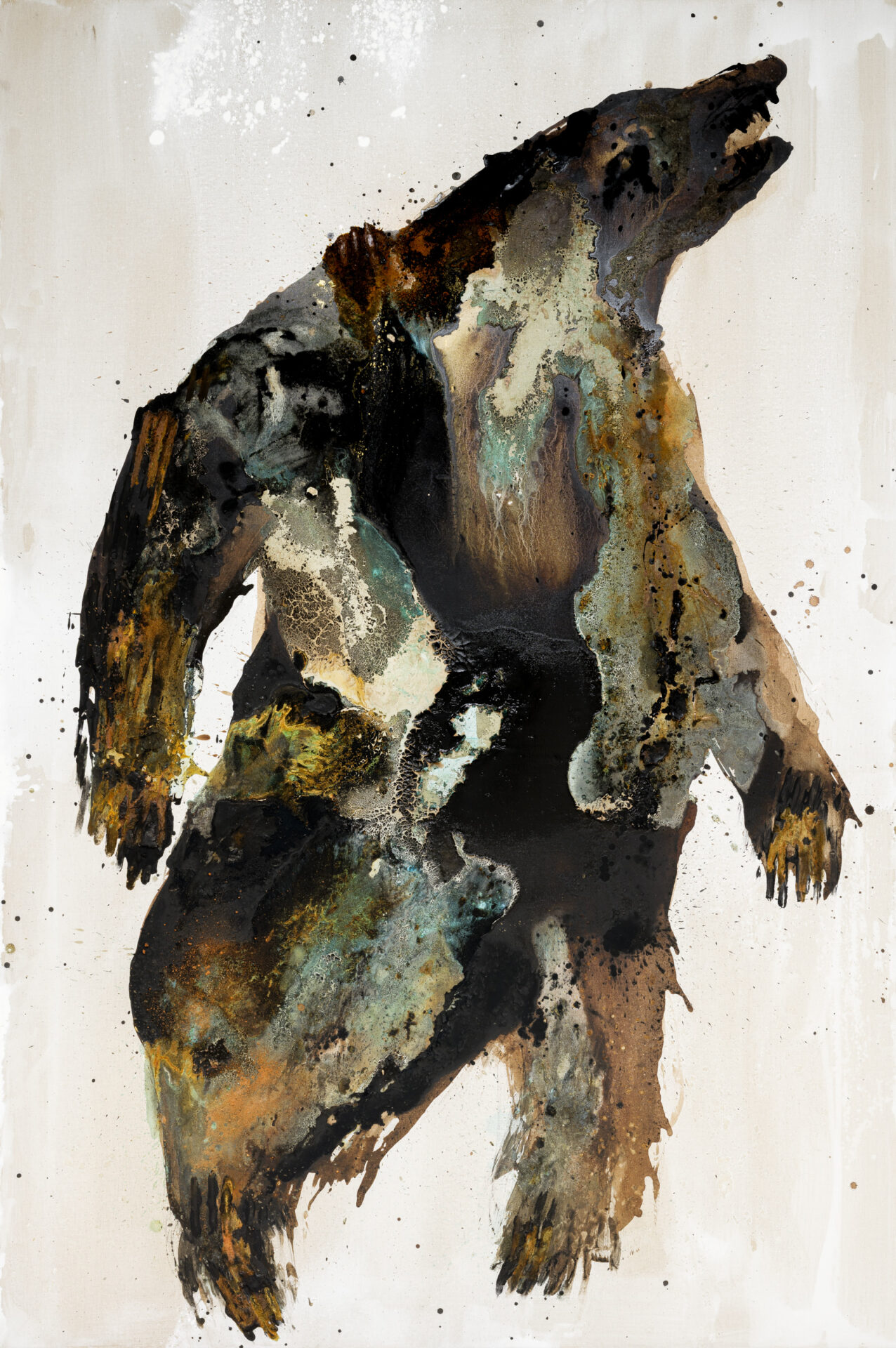
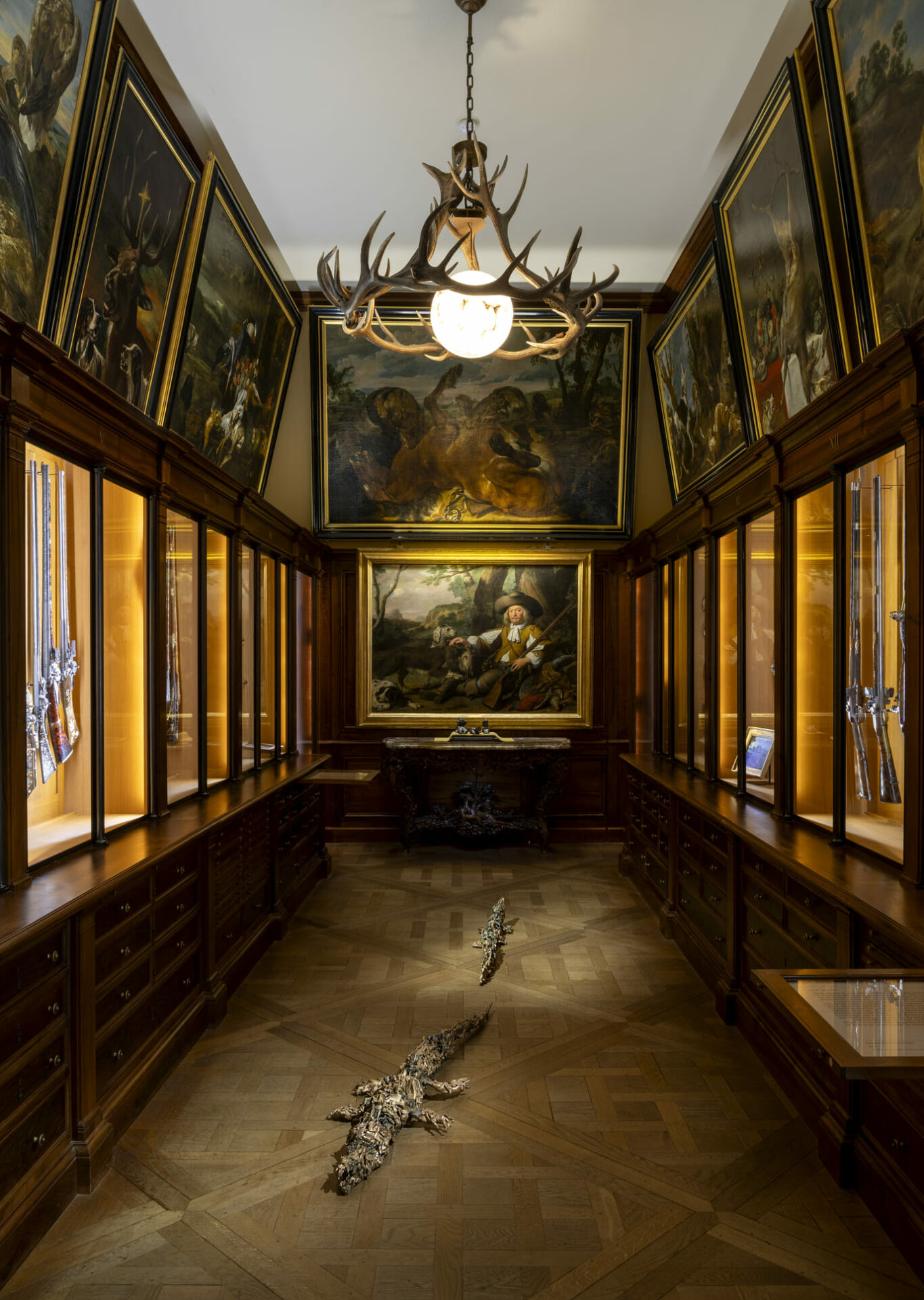
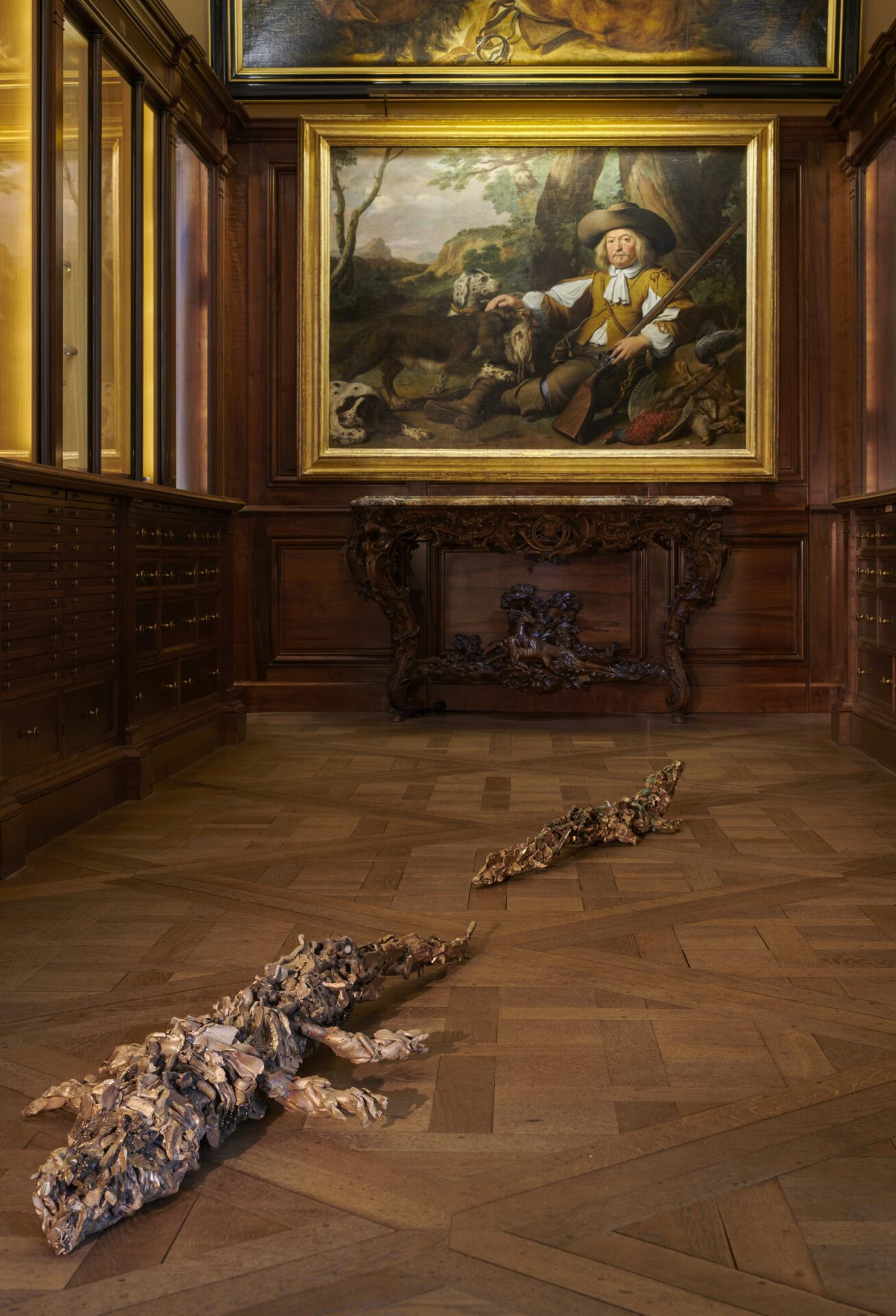
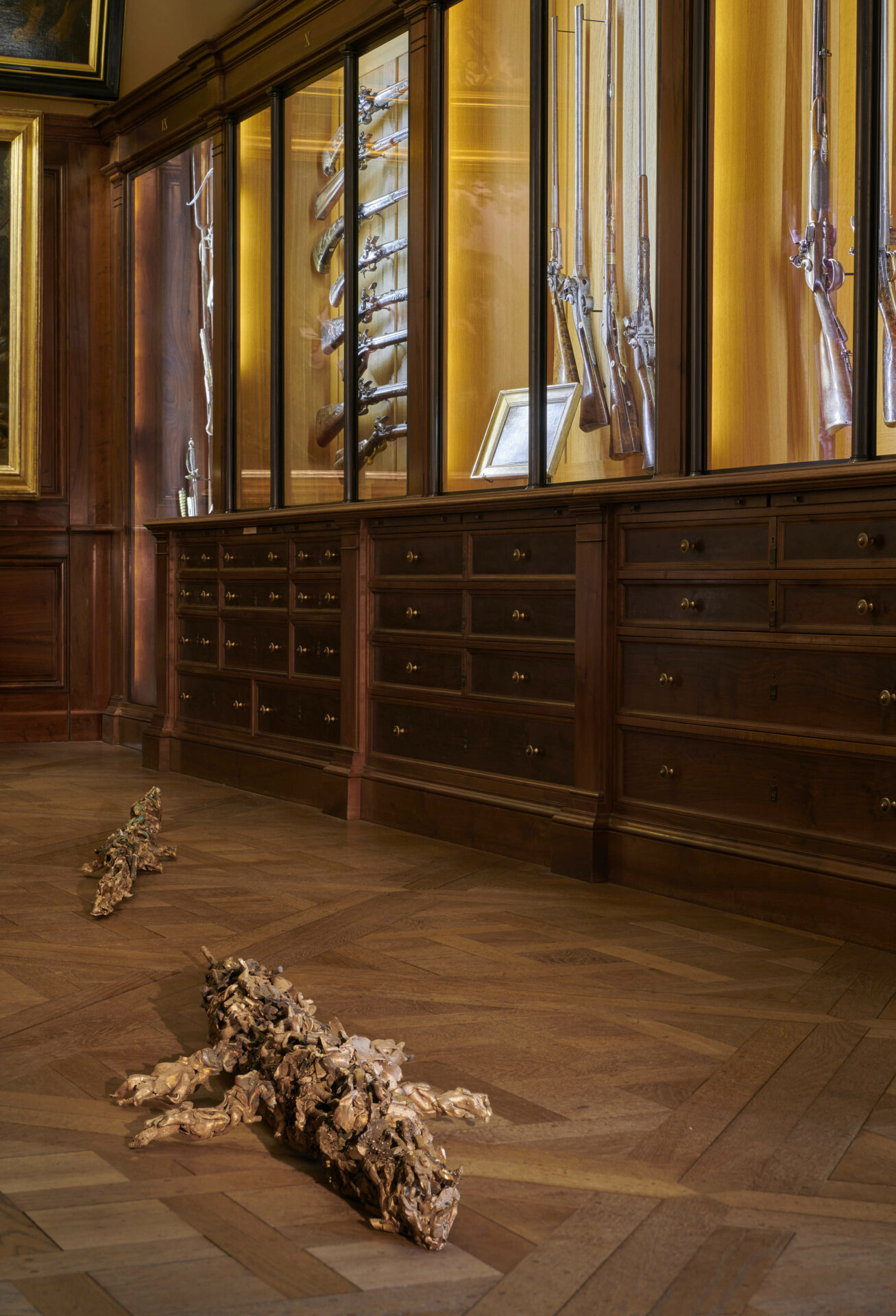
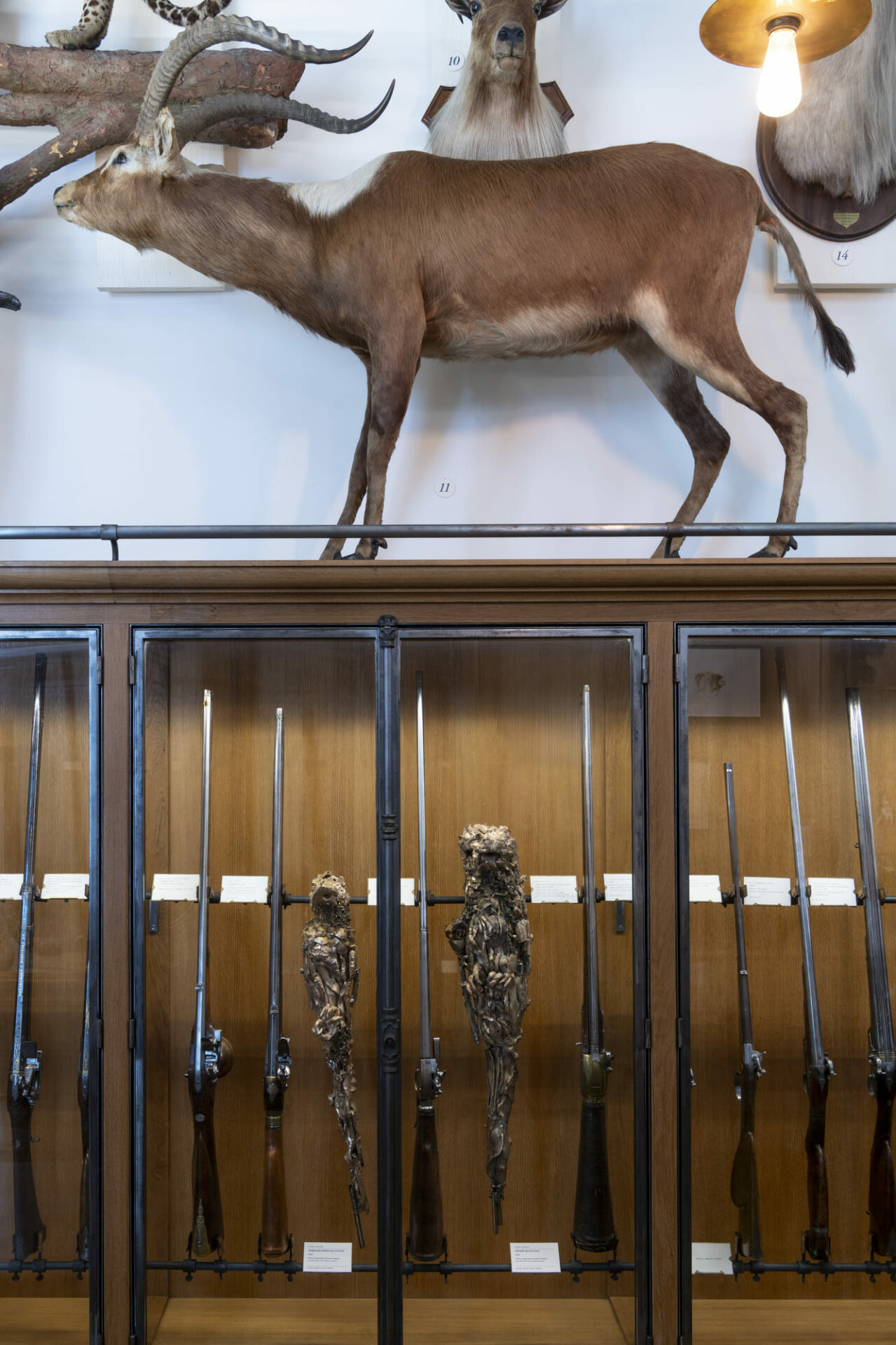
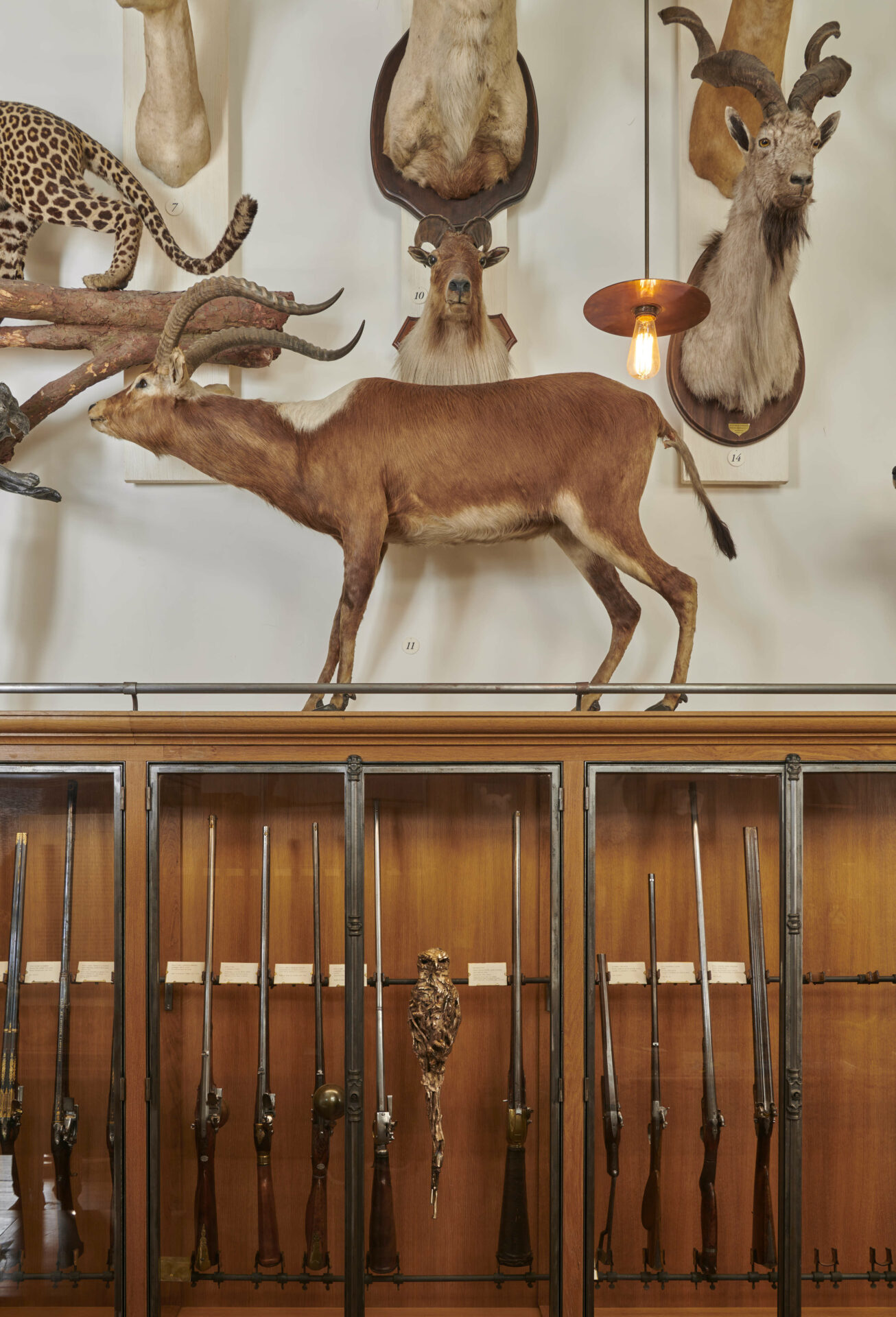
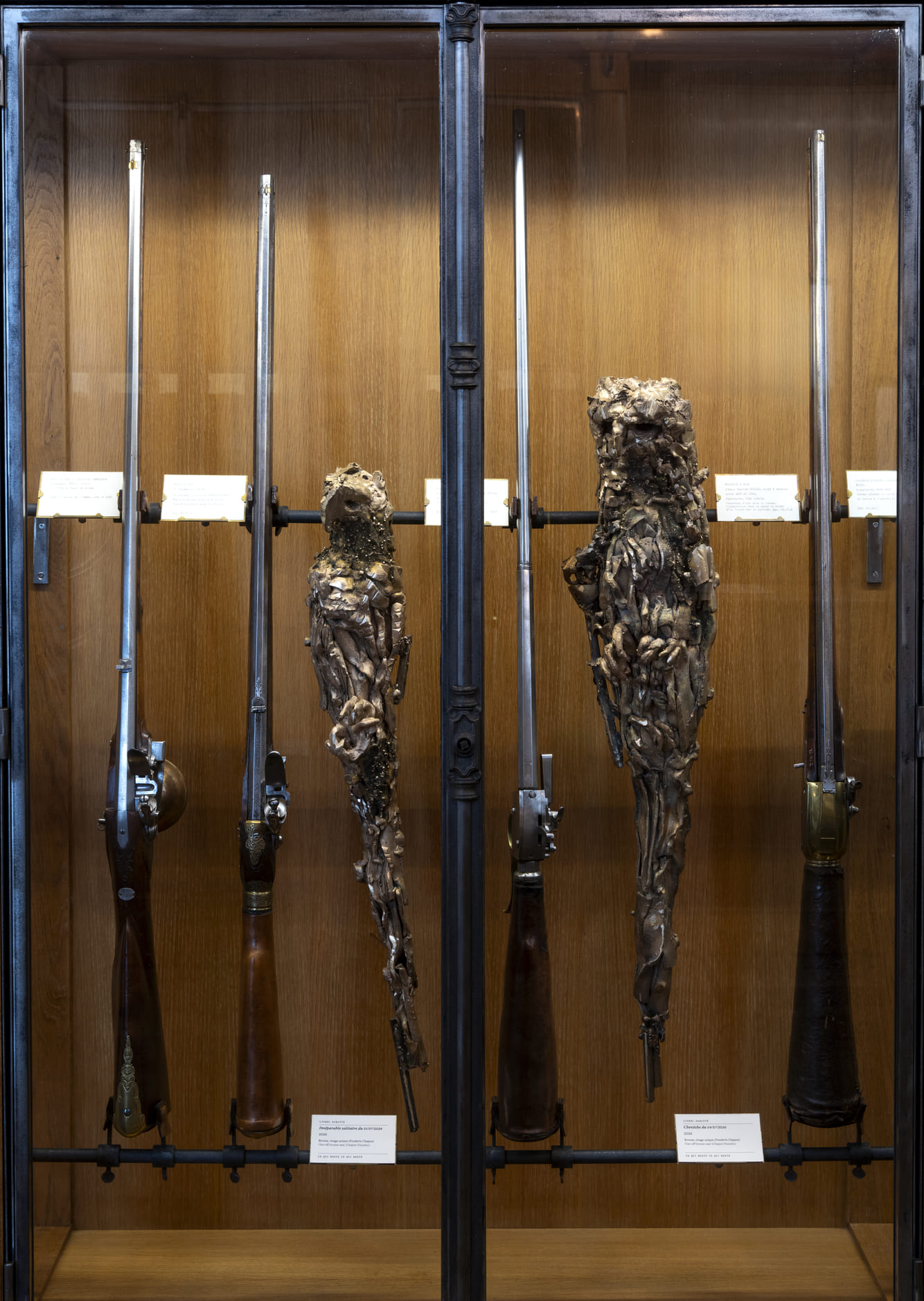
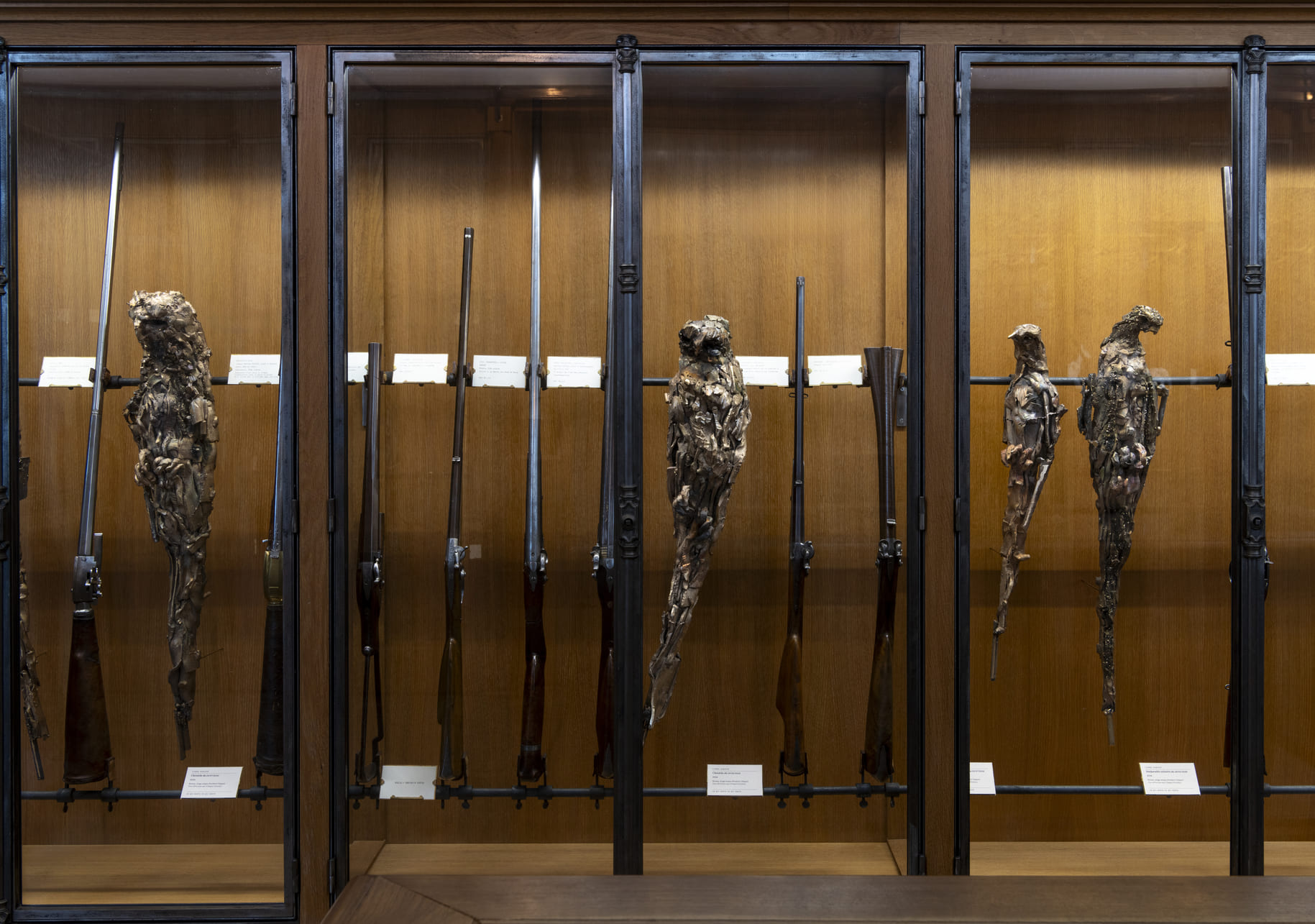
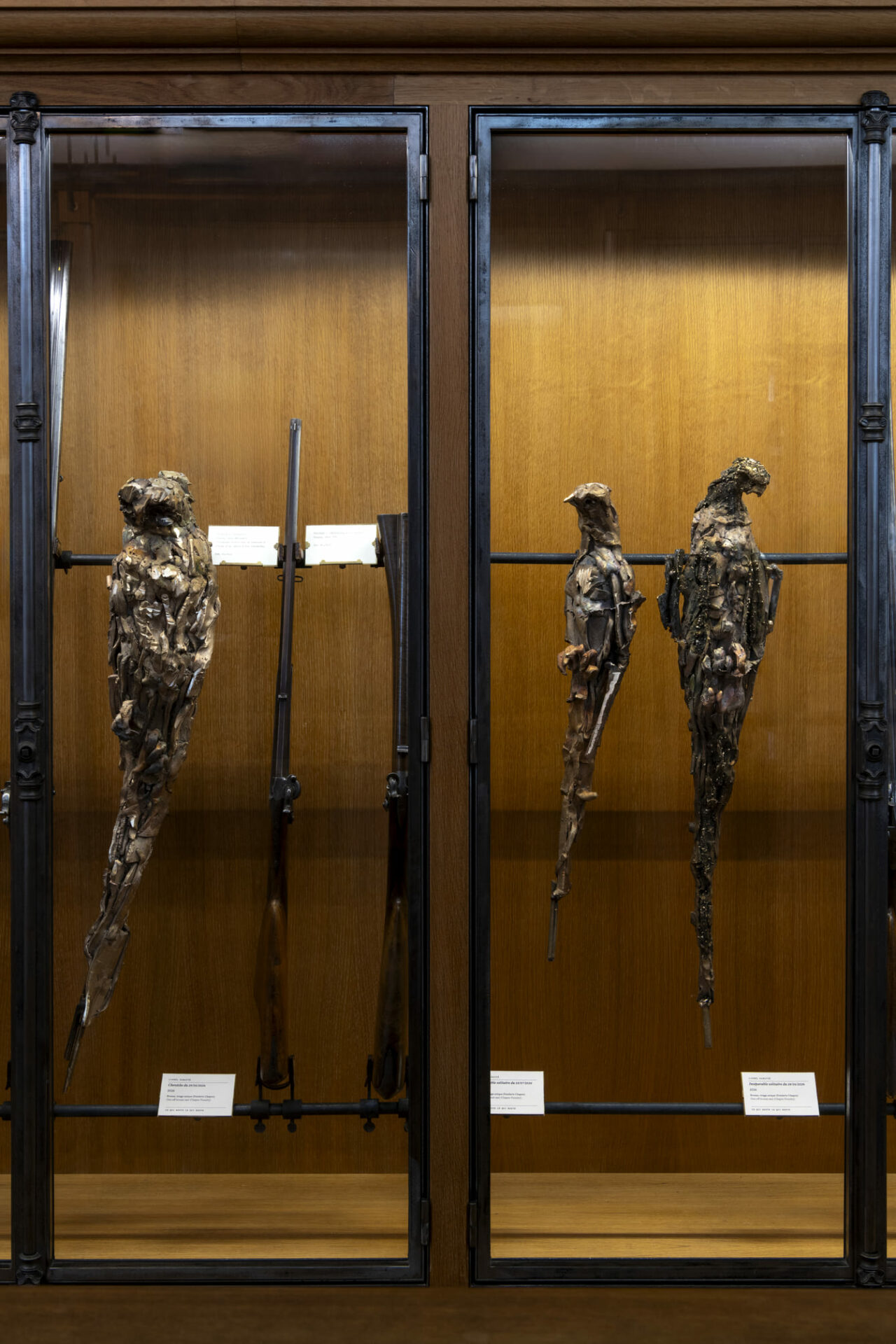
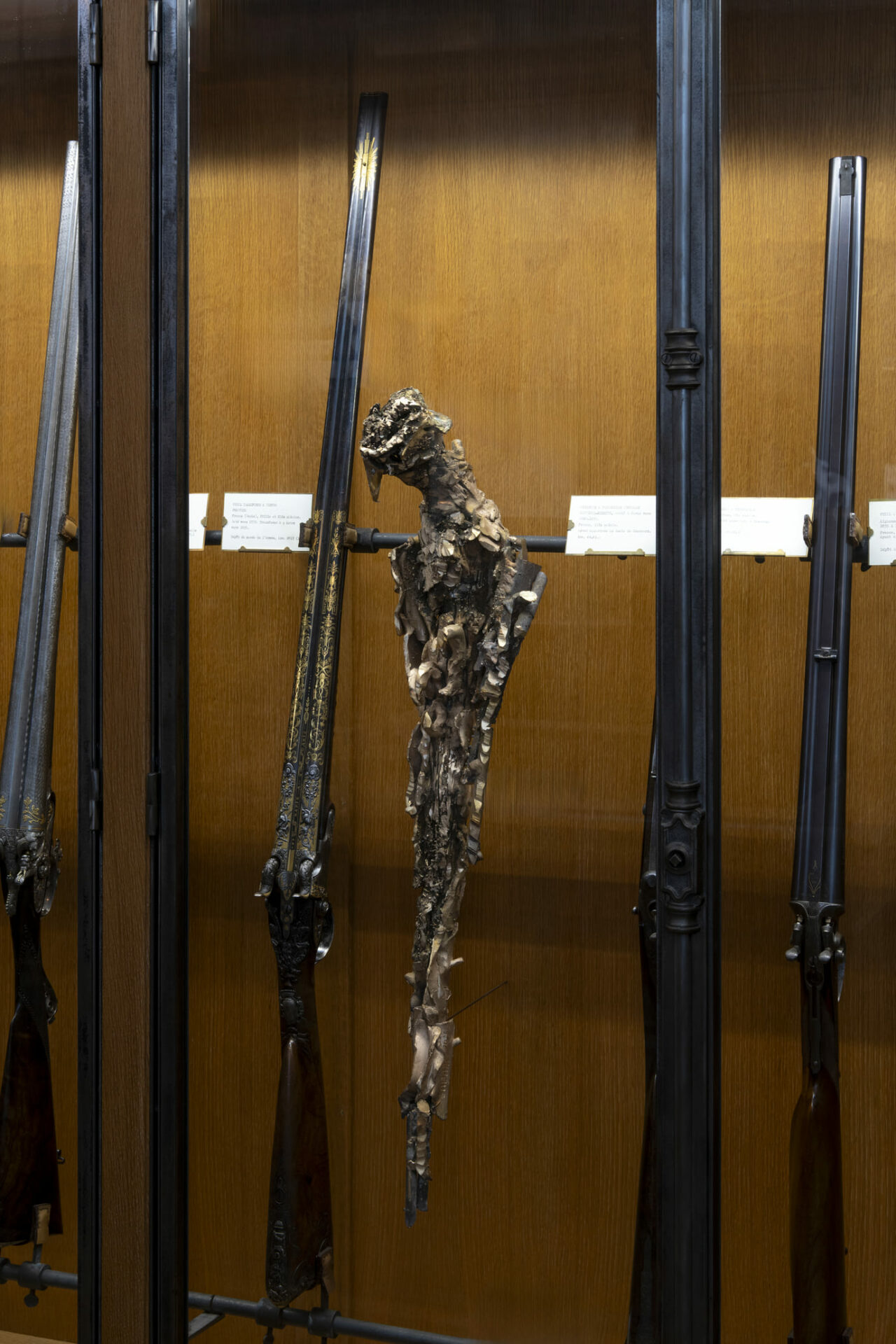
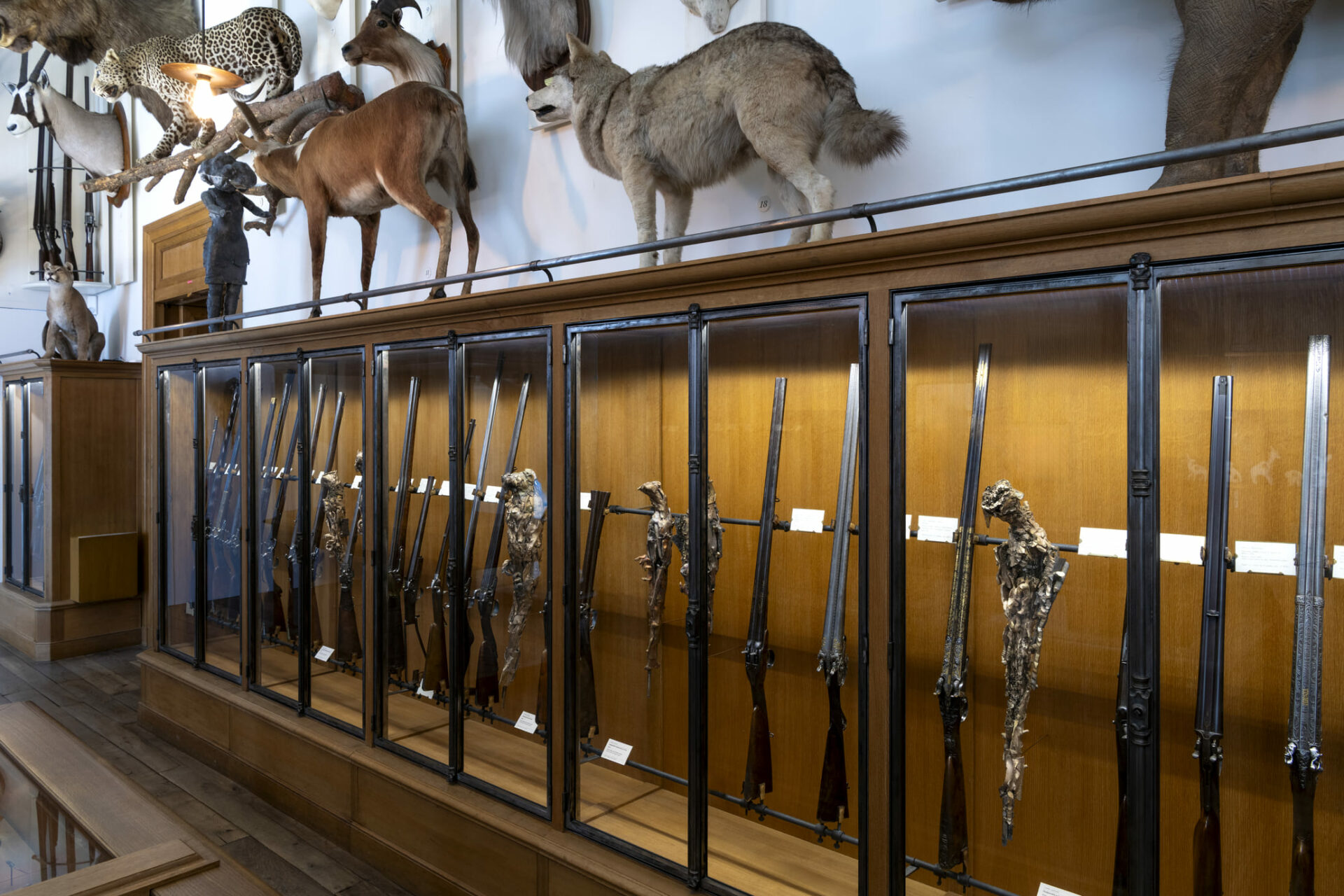
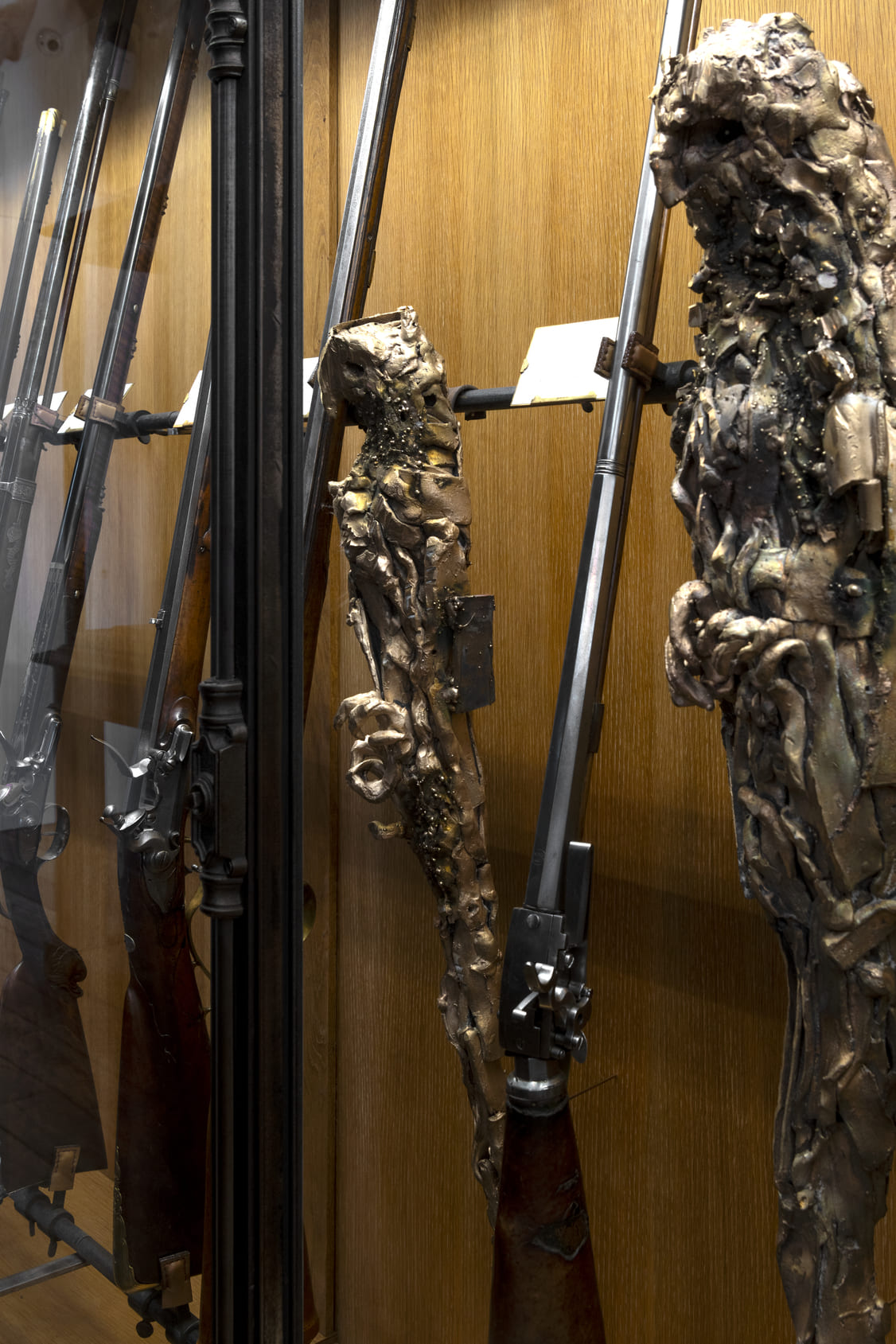
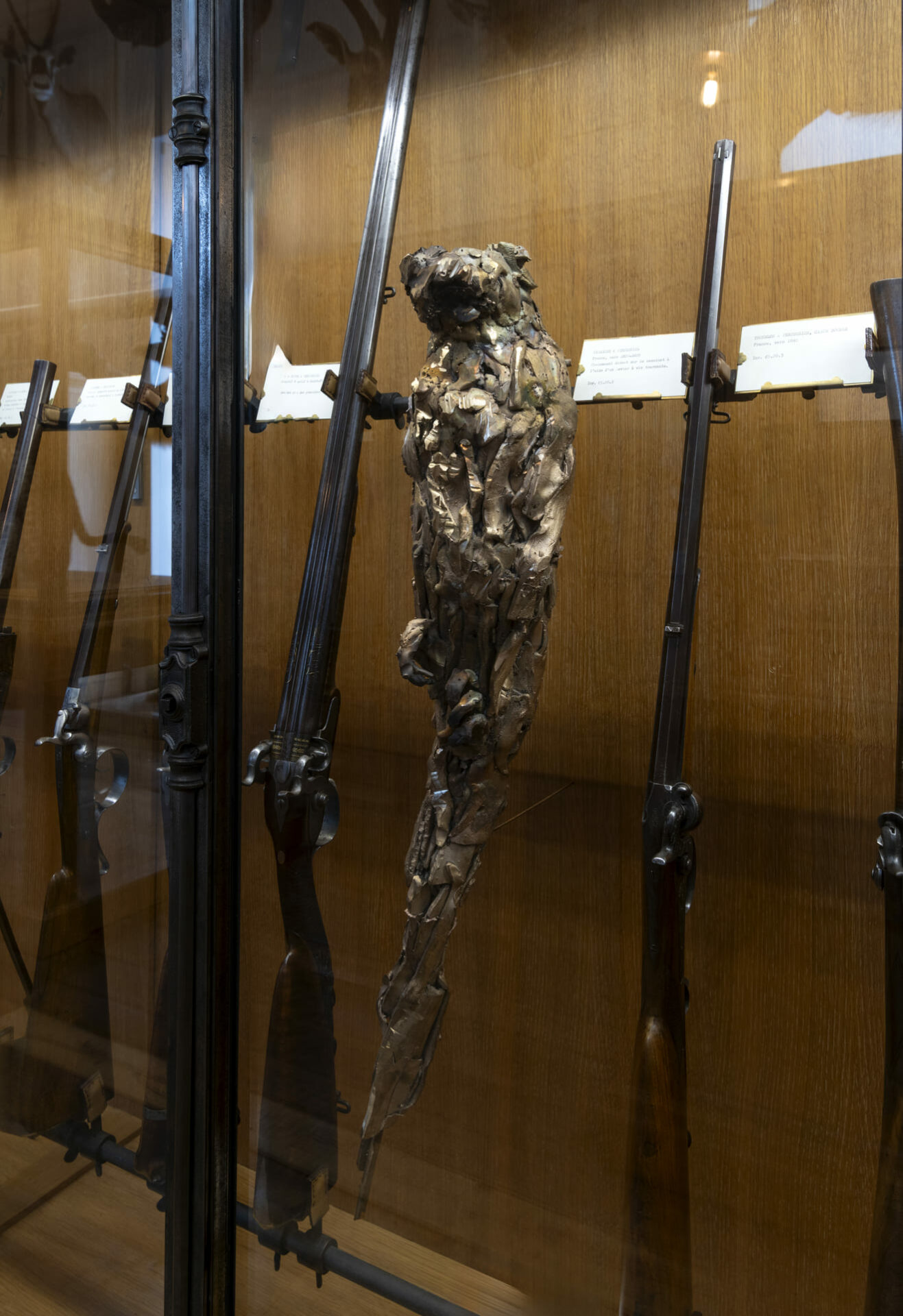
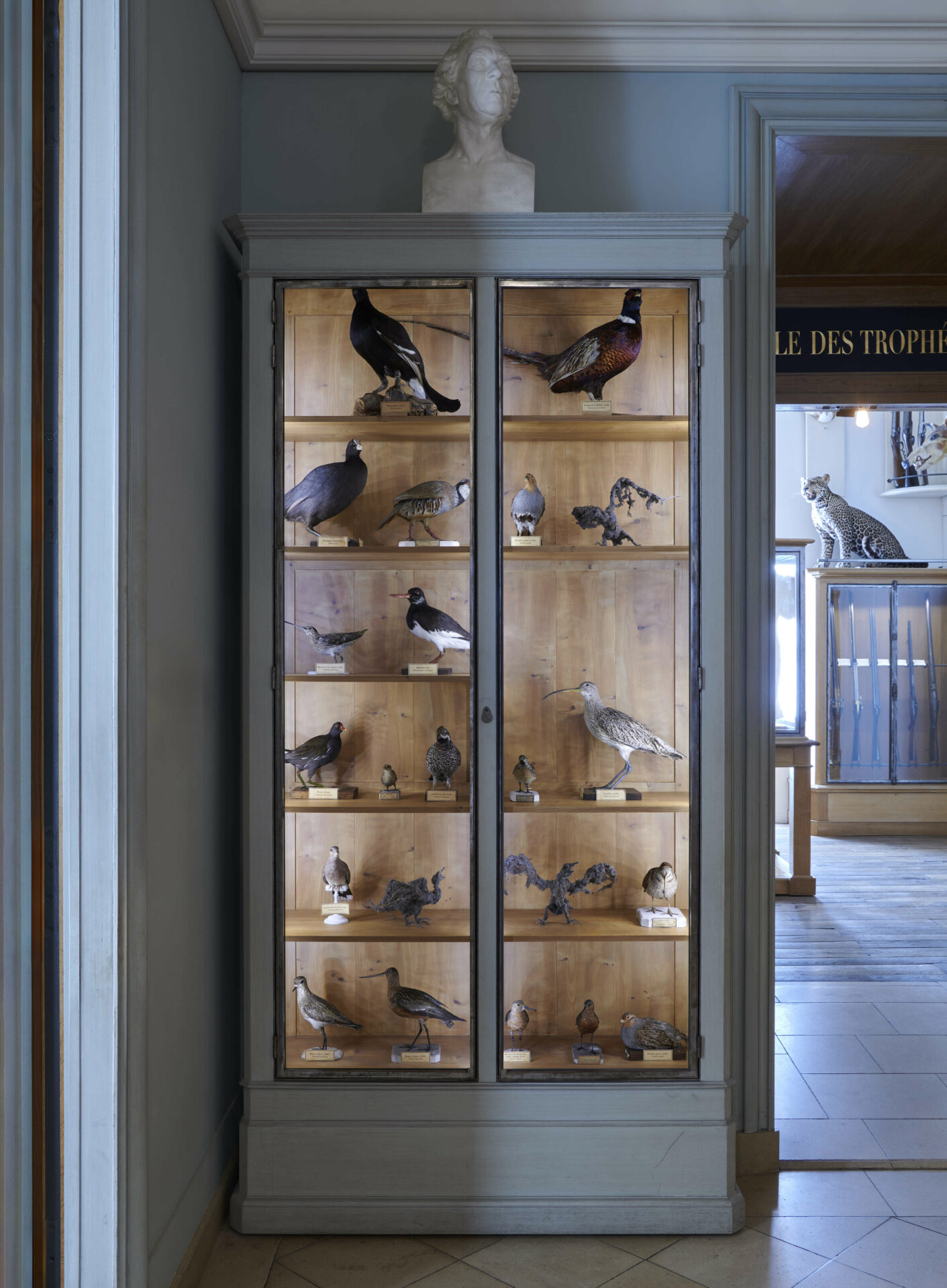
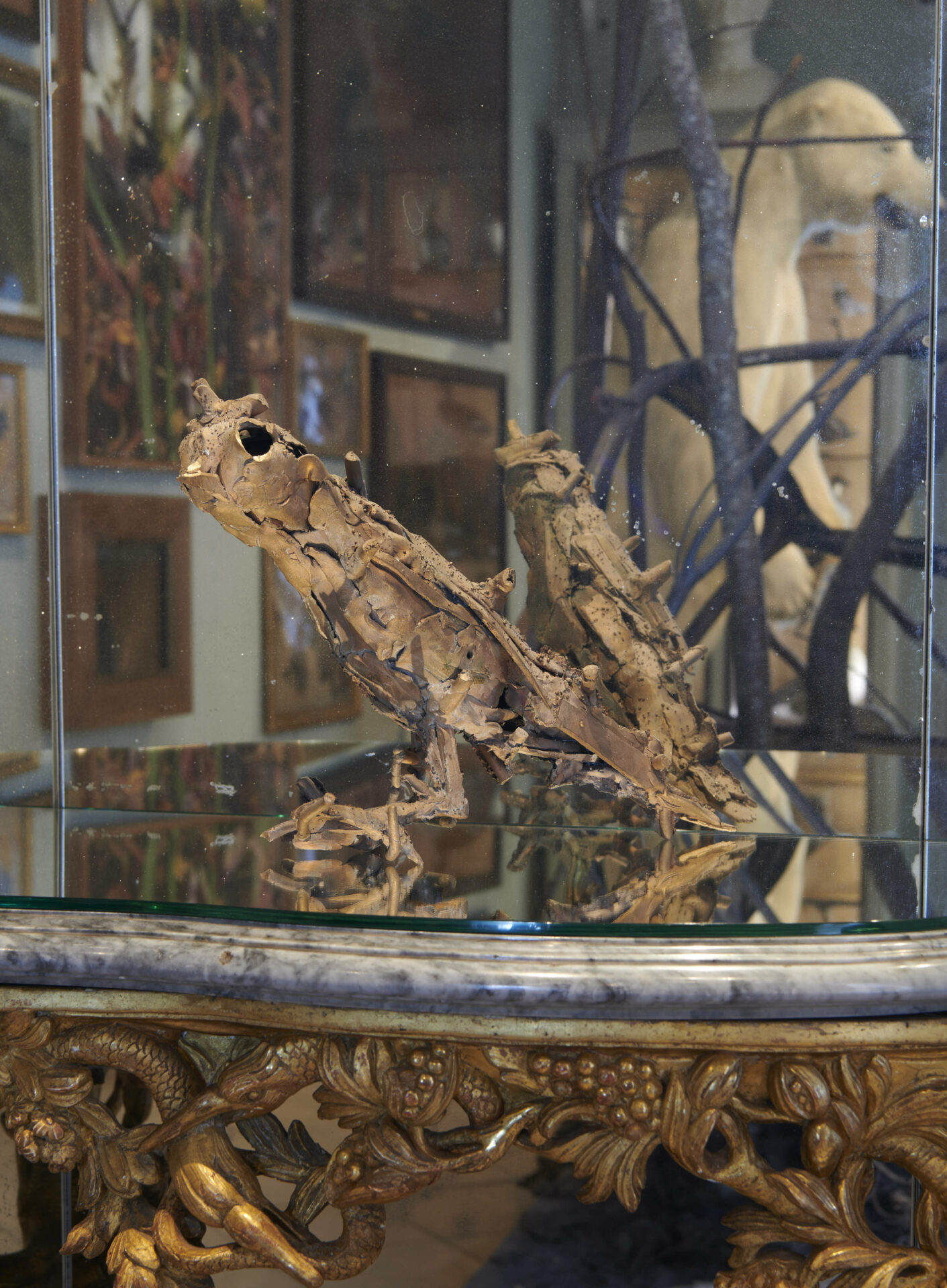
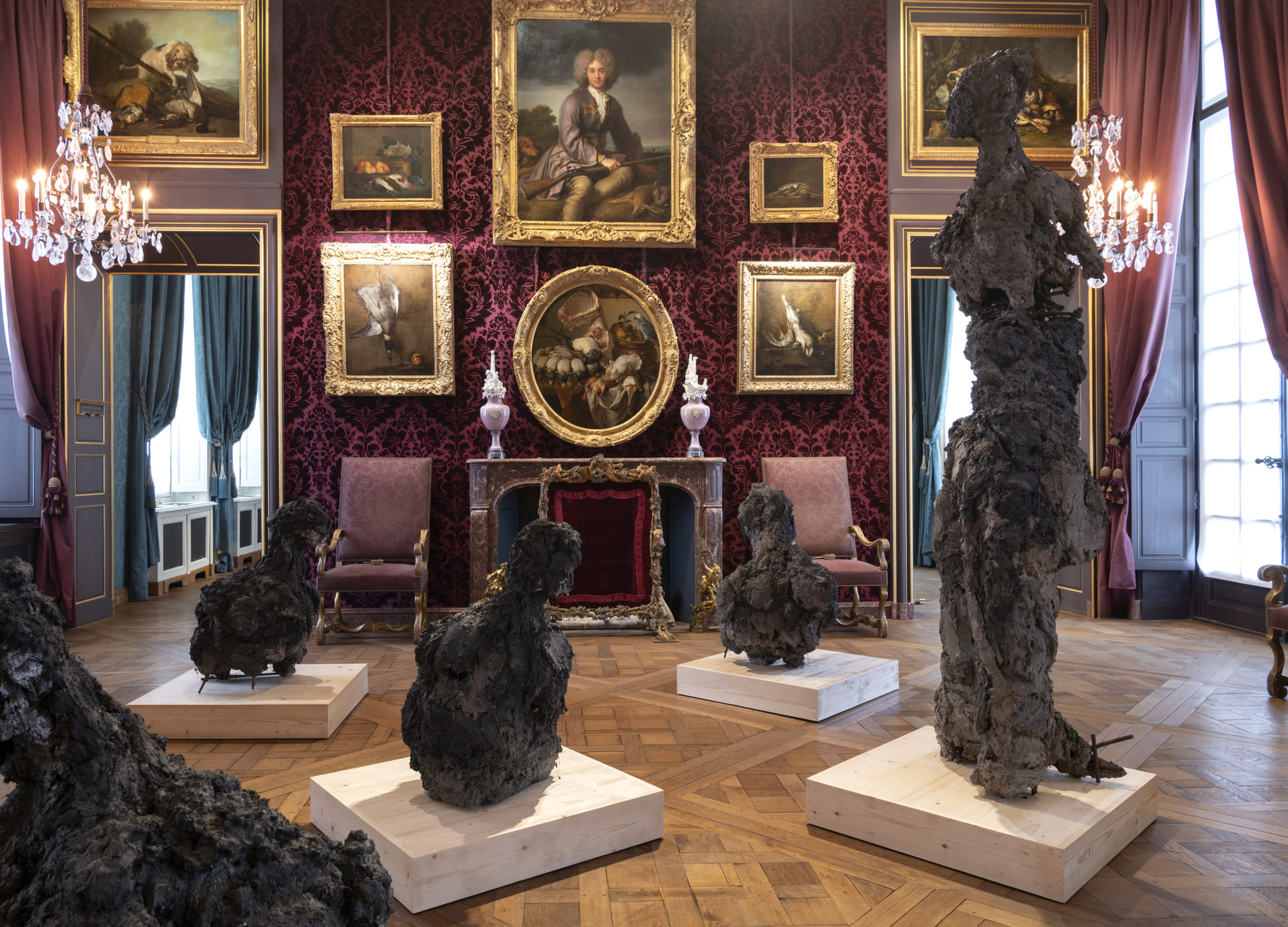
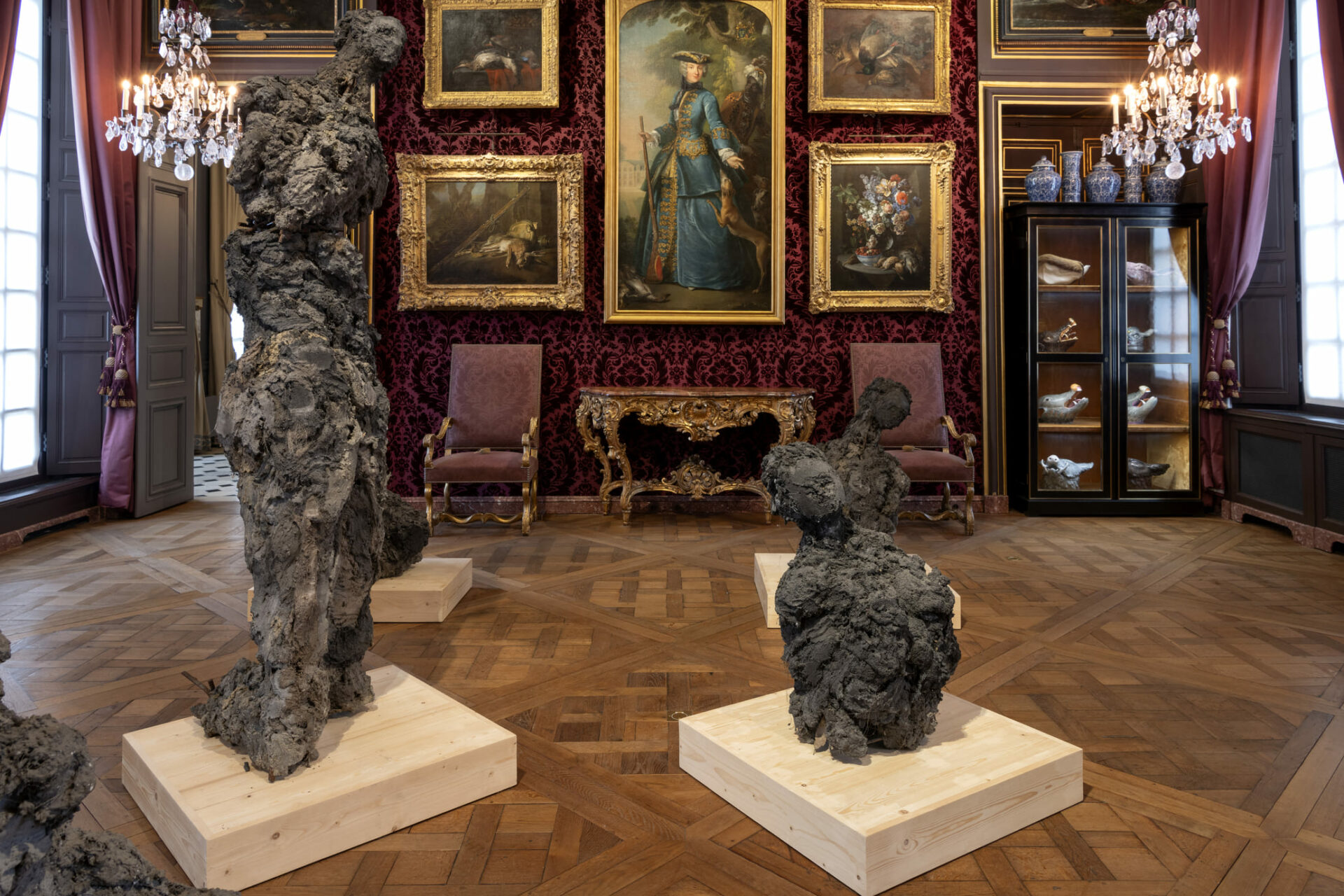
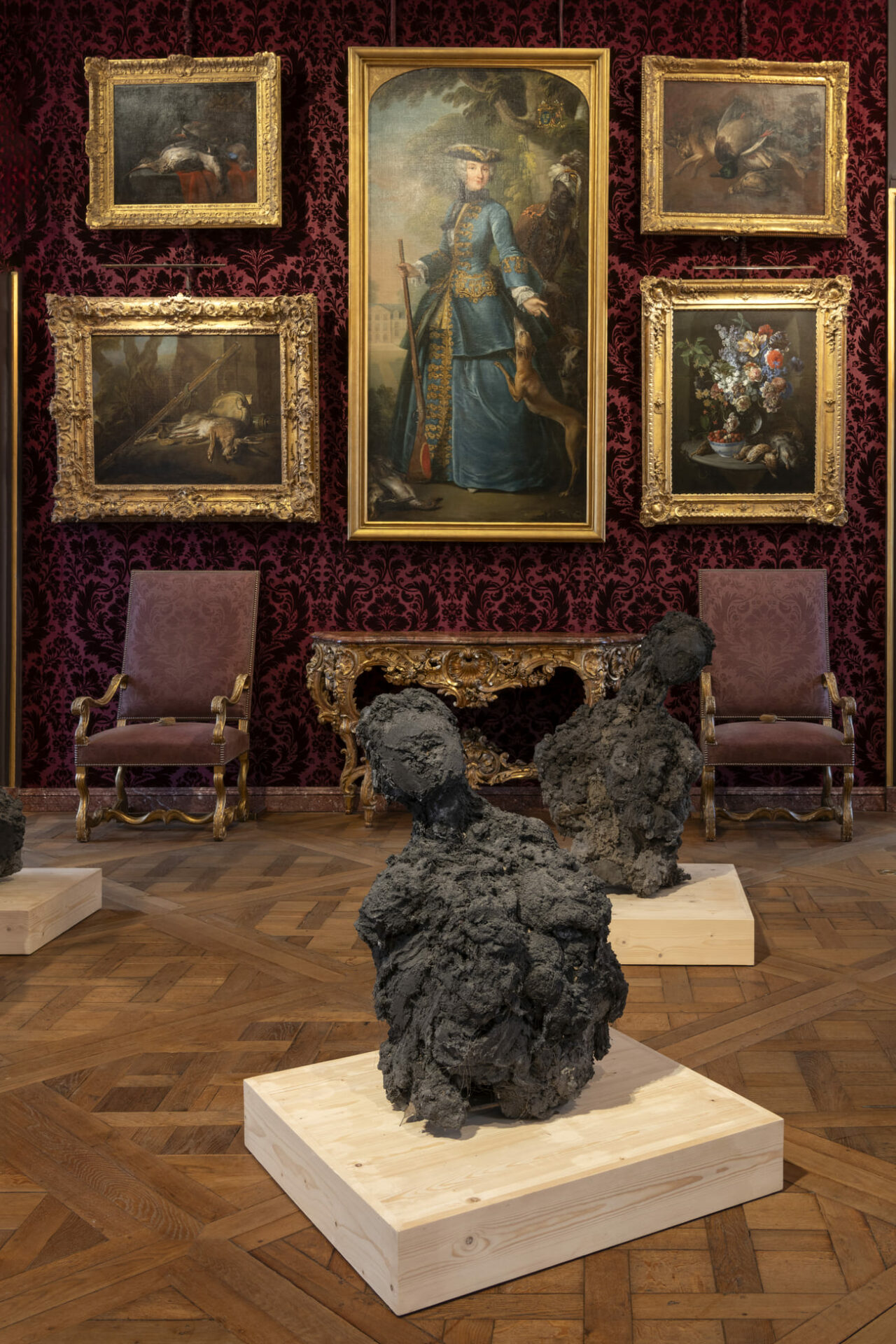
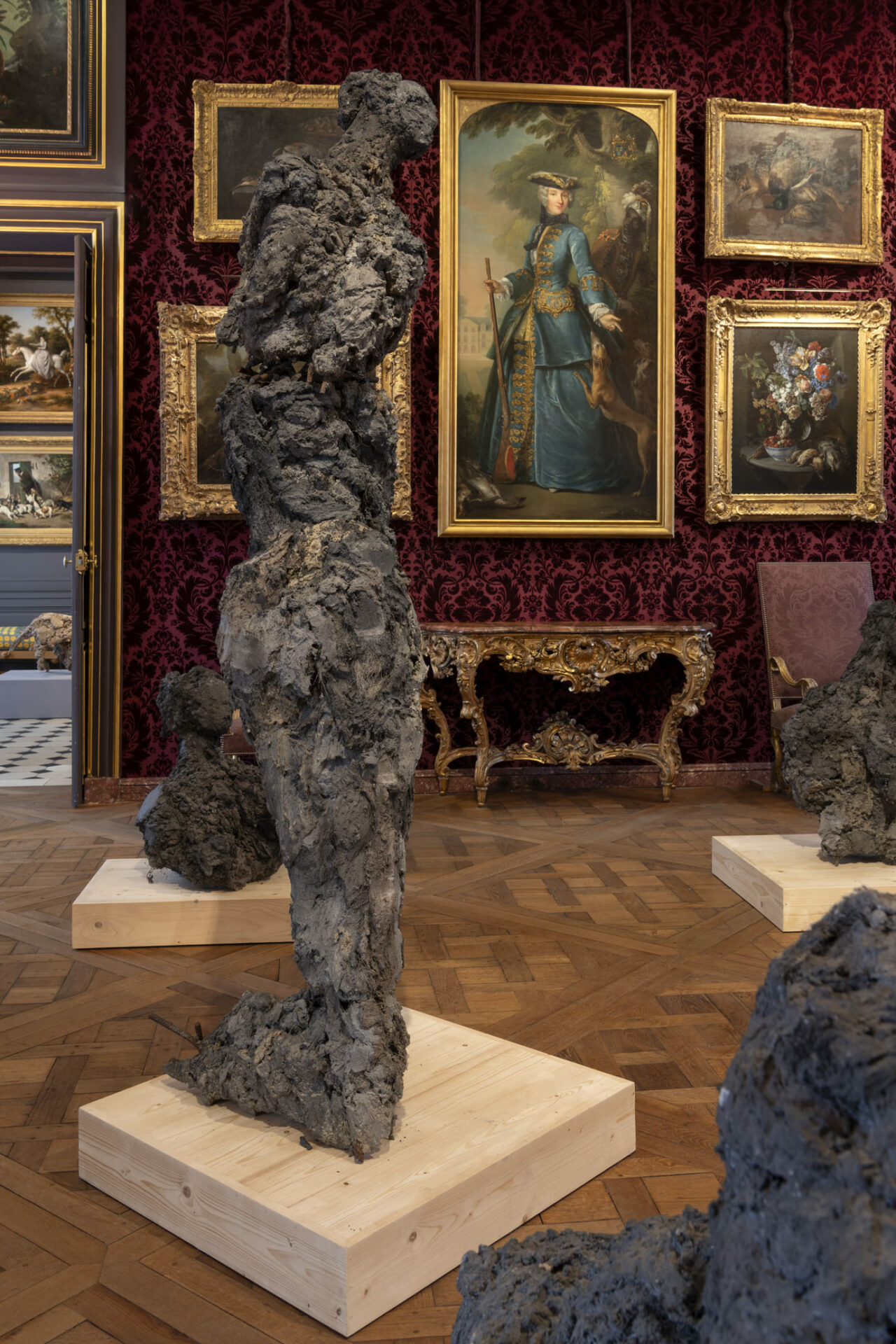
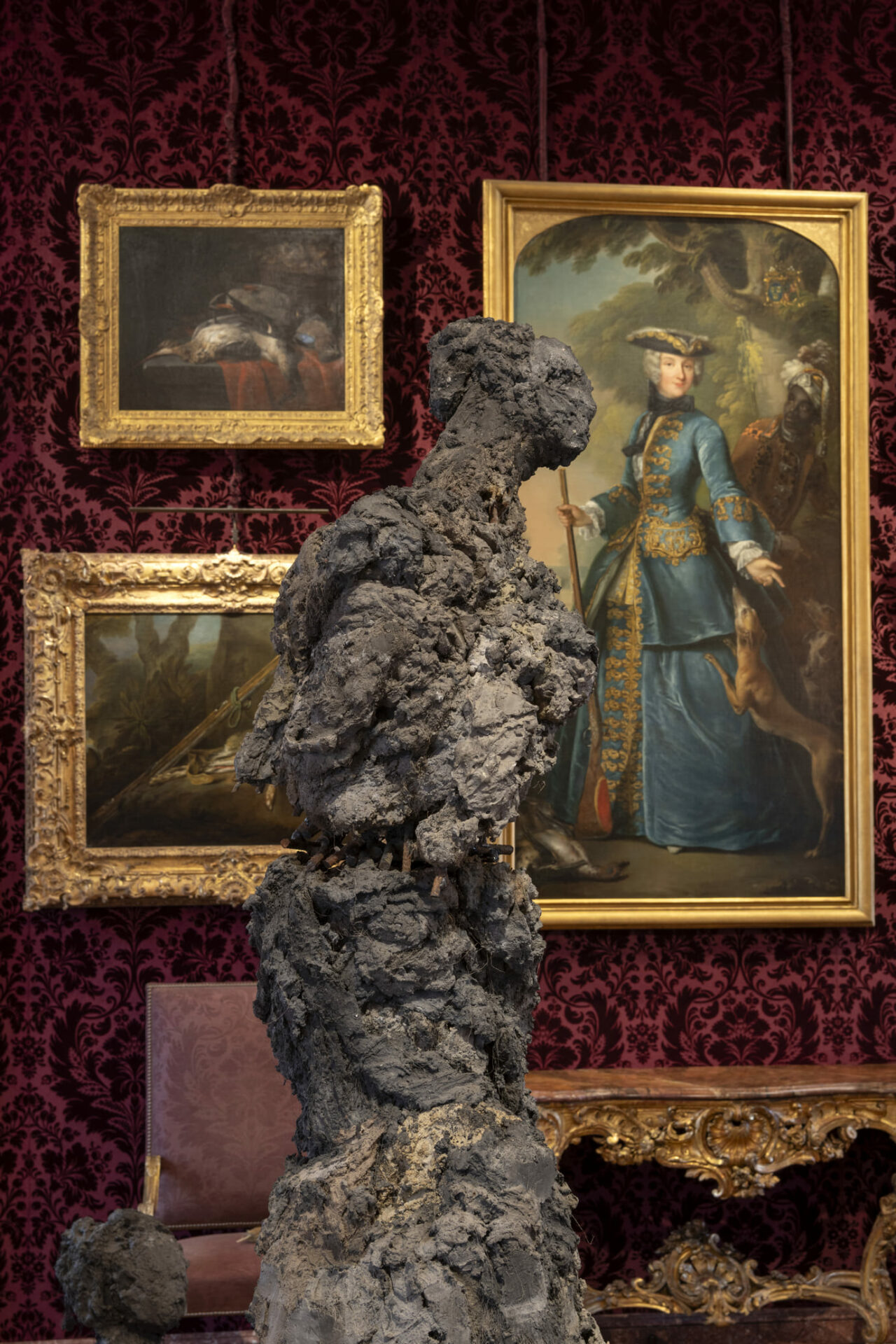
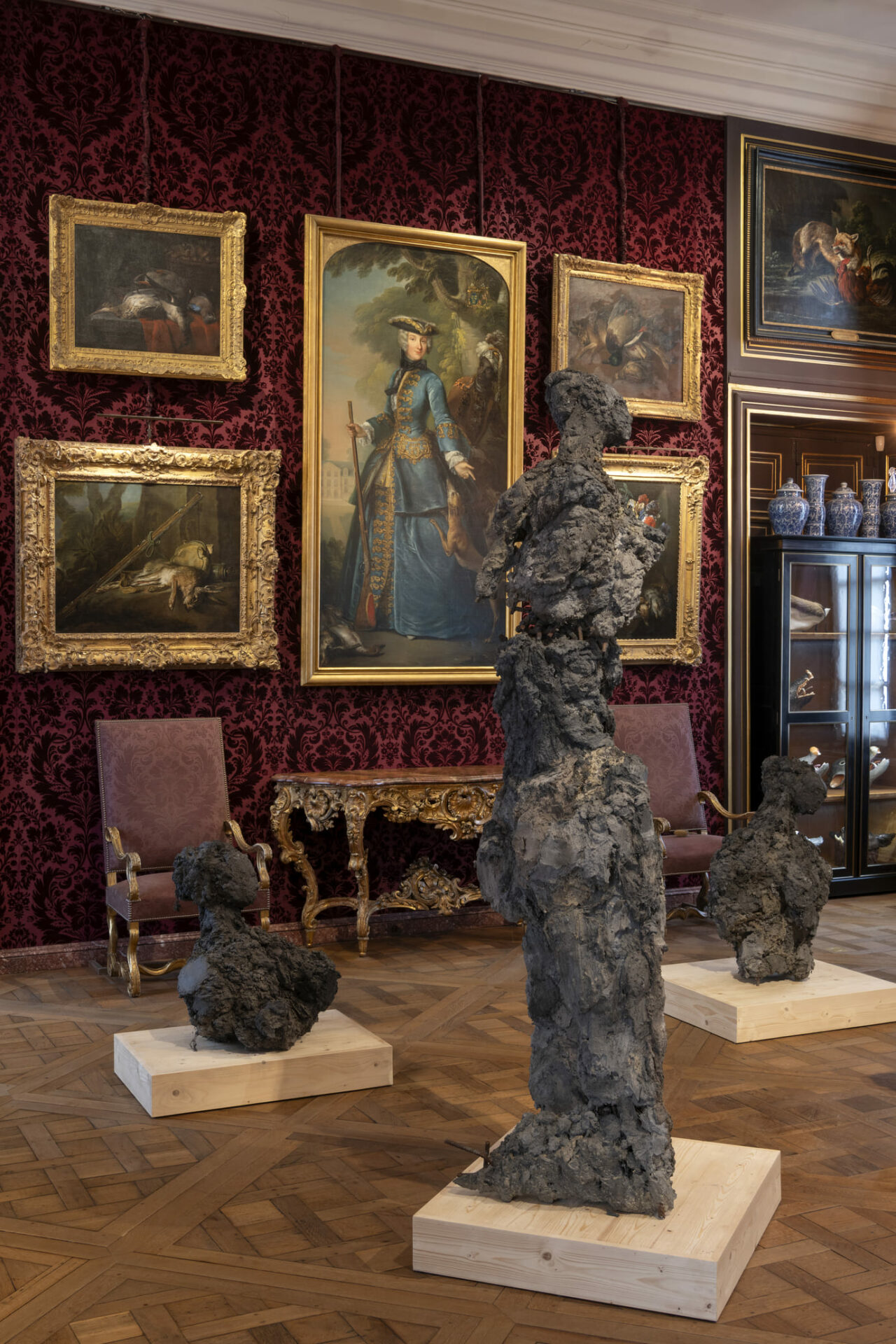
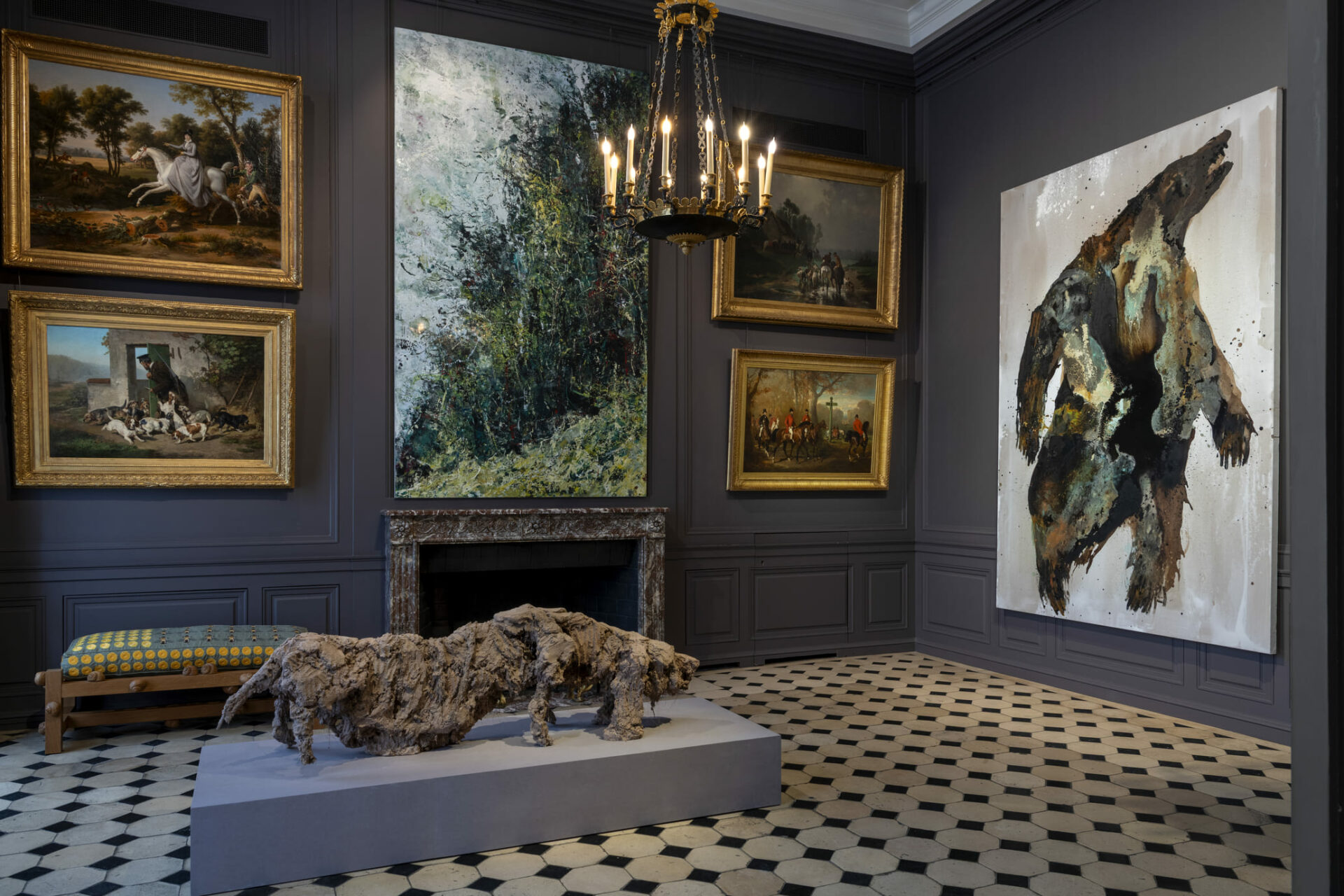
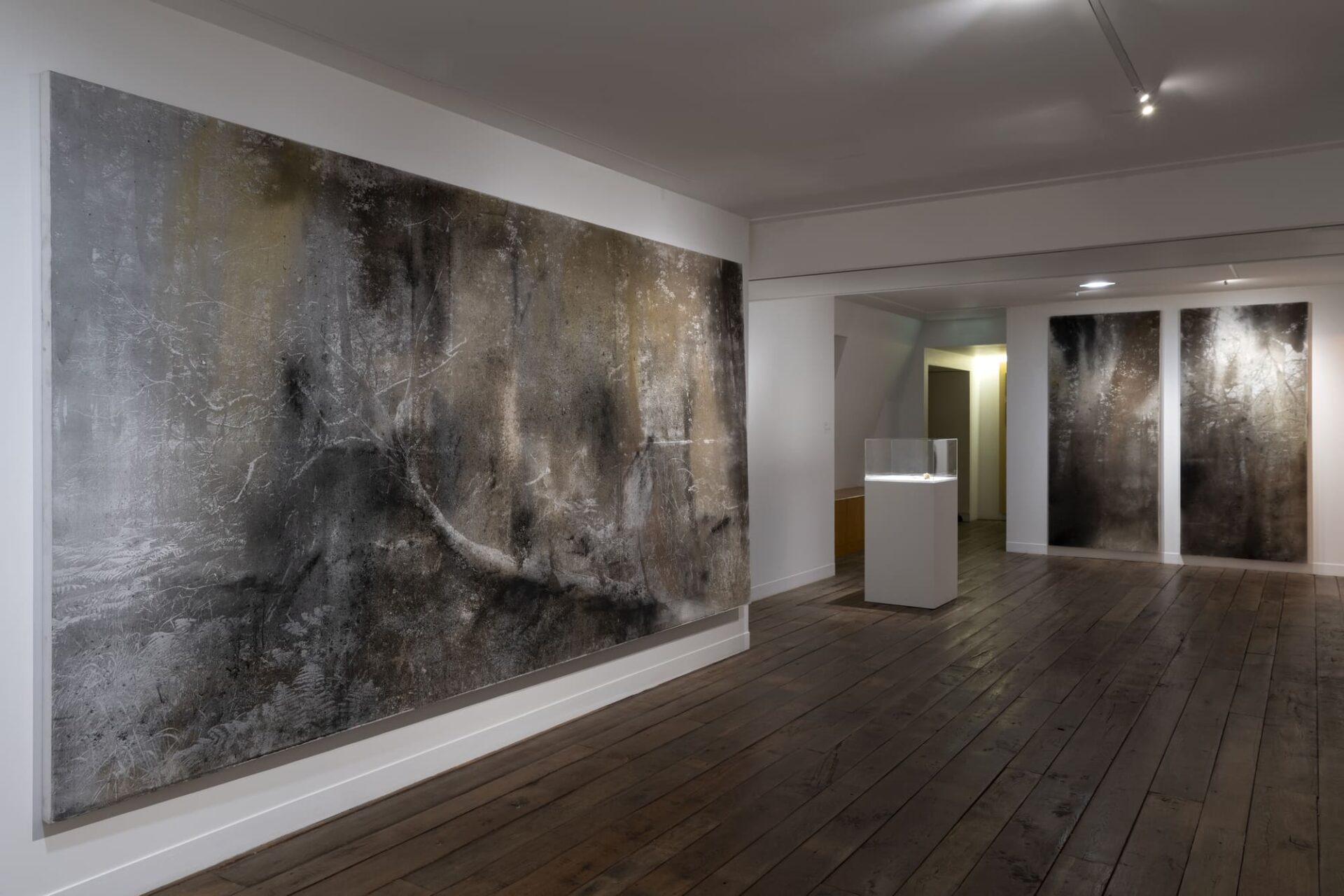
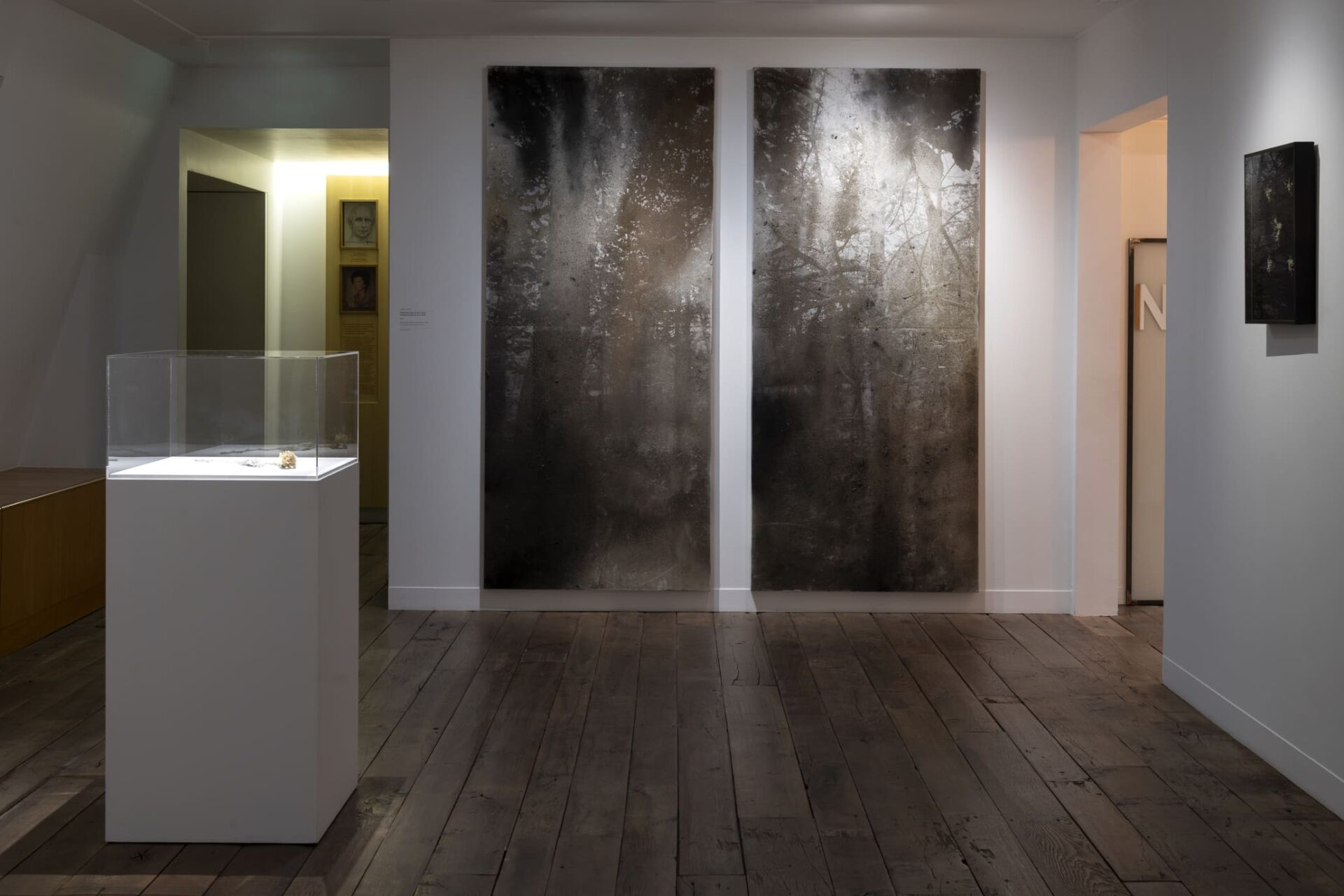
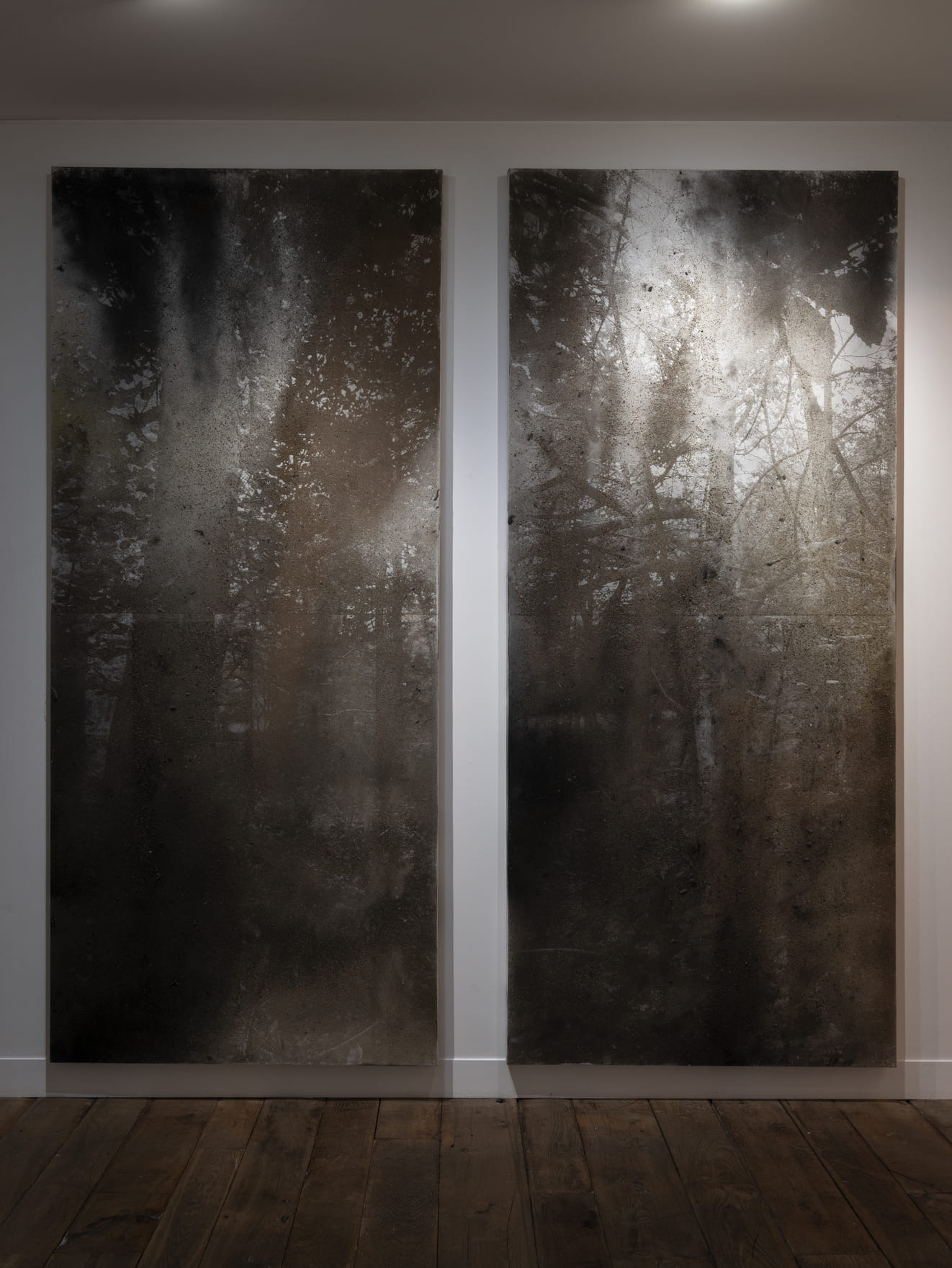
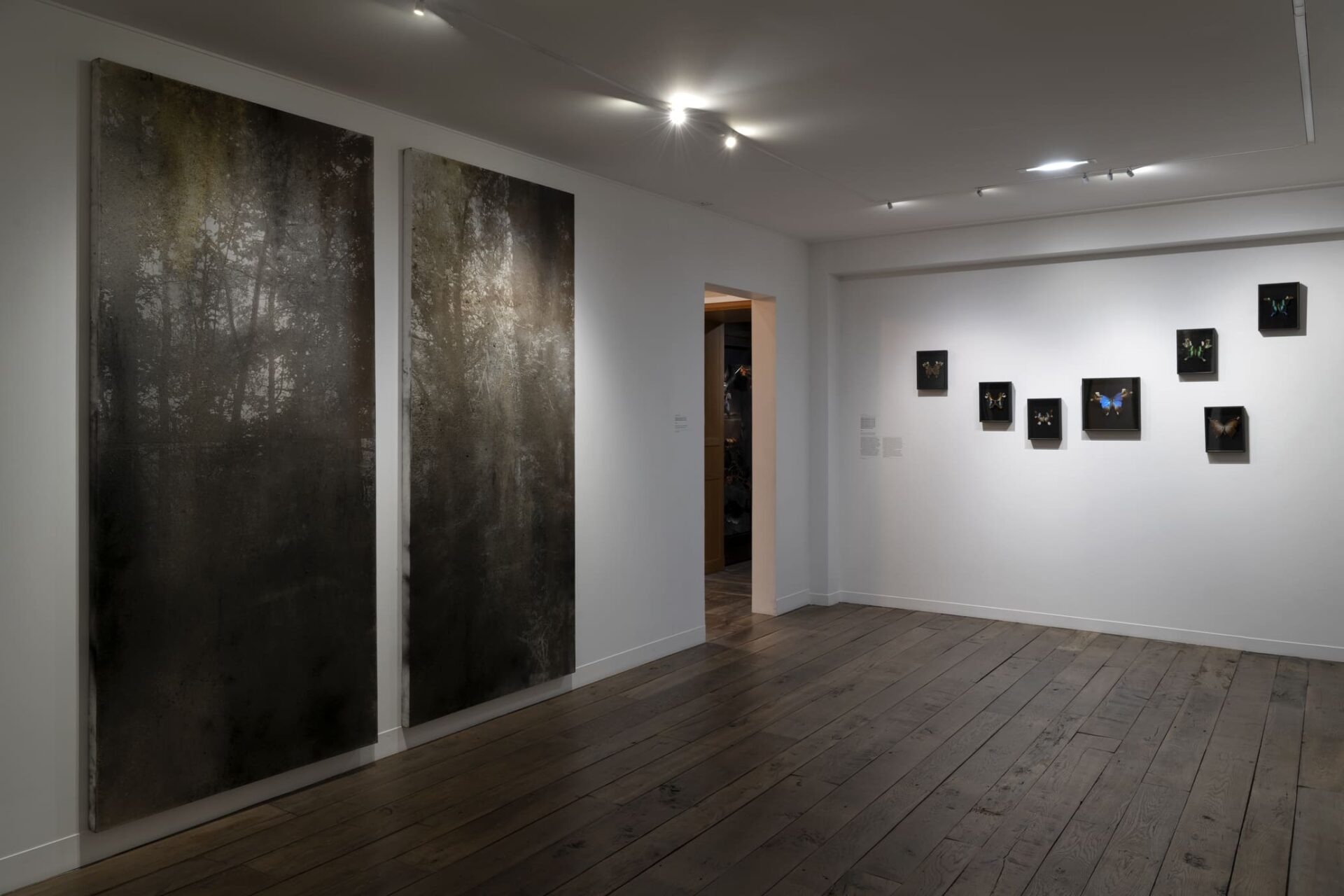
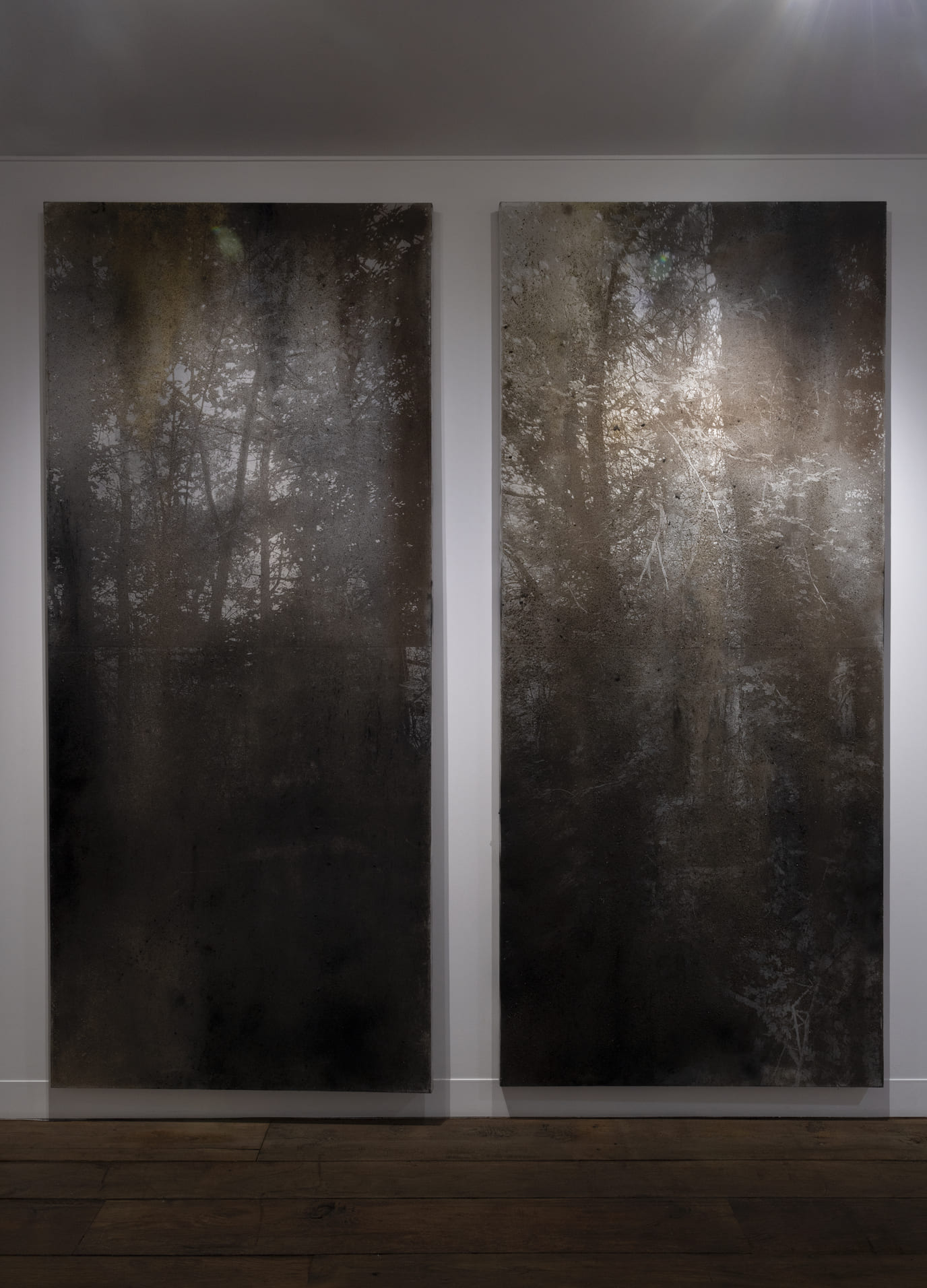
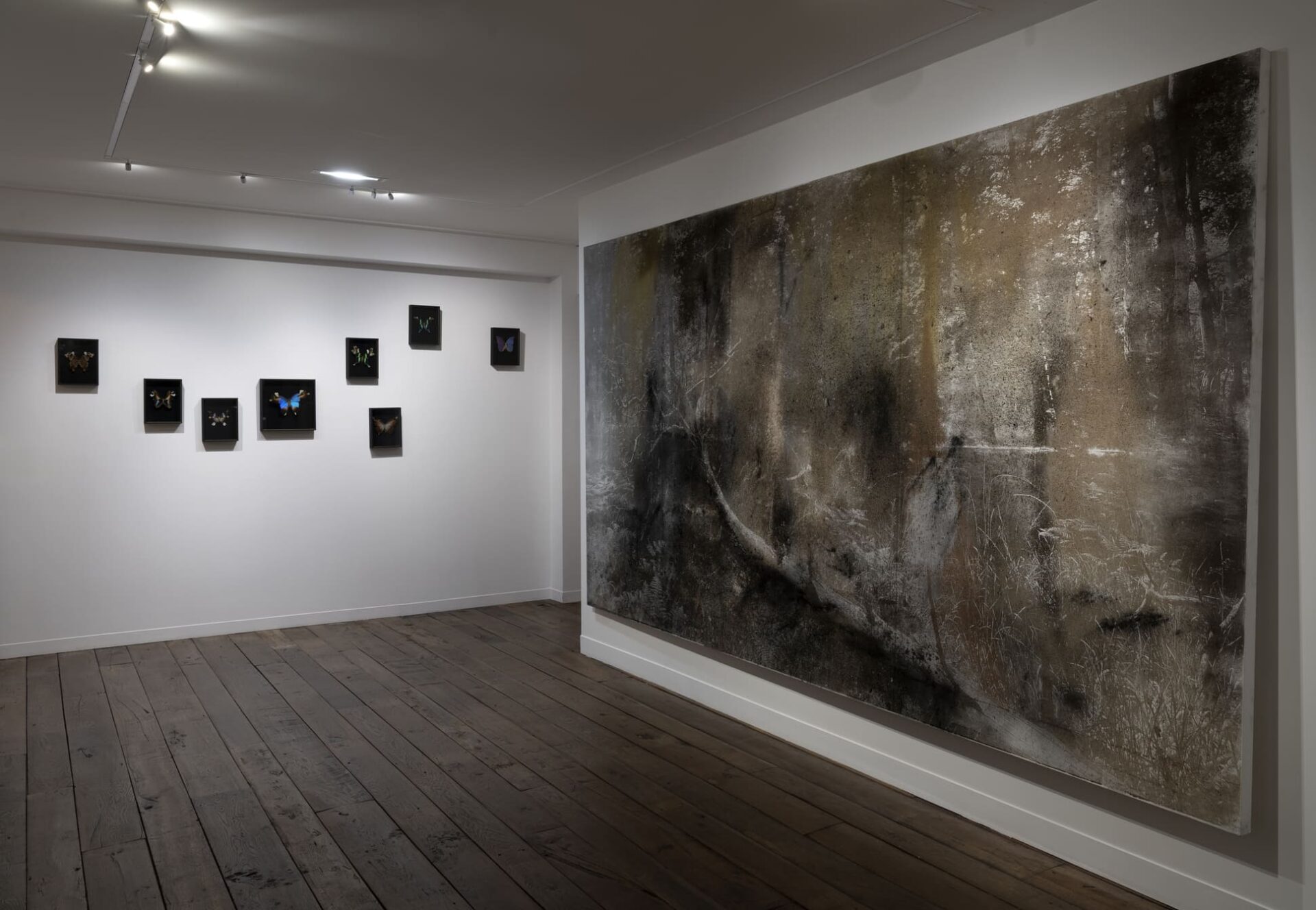
The use of oxidation, the central theme of this exhibition, is also a way of working with time. Bears, deer, wild boar, birds, foetuses or heads: it is the chemical reaction of oxidation that gives rise to the composition. A mixture of iron- and oxygen-based solutions creates rust-like effects with varied sheens and colours. Upon these coloured layers, Lionel Sabatté sprinkles earth from Lascaux.
With this earth, just as with dust or the remnants of fingernails from a myriad of human lives, Lionel Sabatté poetically inhabits time,
using memory as his medium. Through oxidation and the earth of Lascaux – echoes of cave art – he imbues his creations with an archaic power, as if he were tracing back to the very place of birth, both of creation and of life itself.
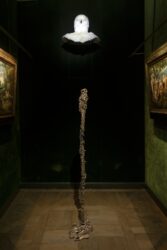
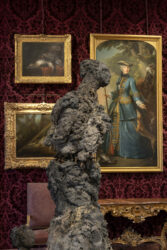
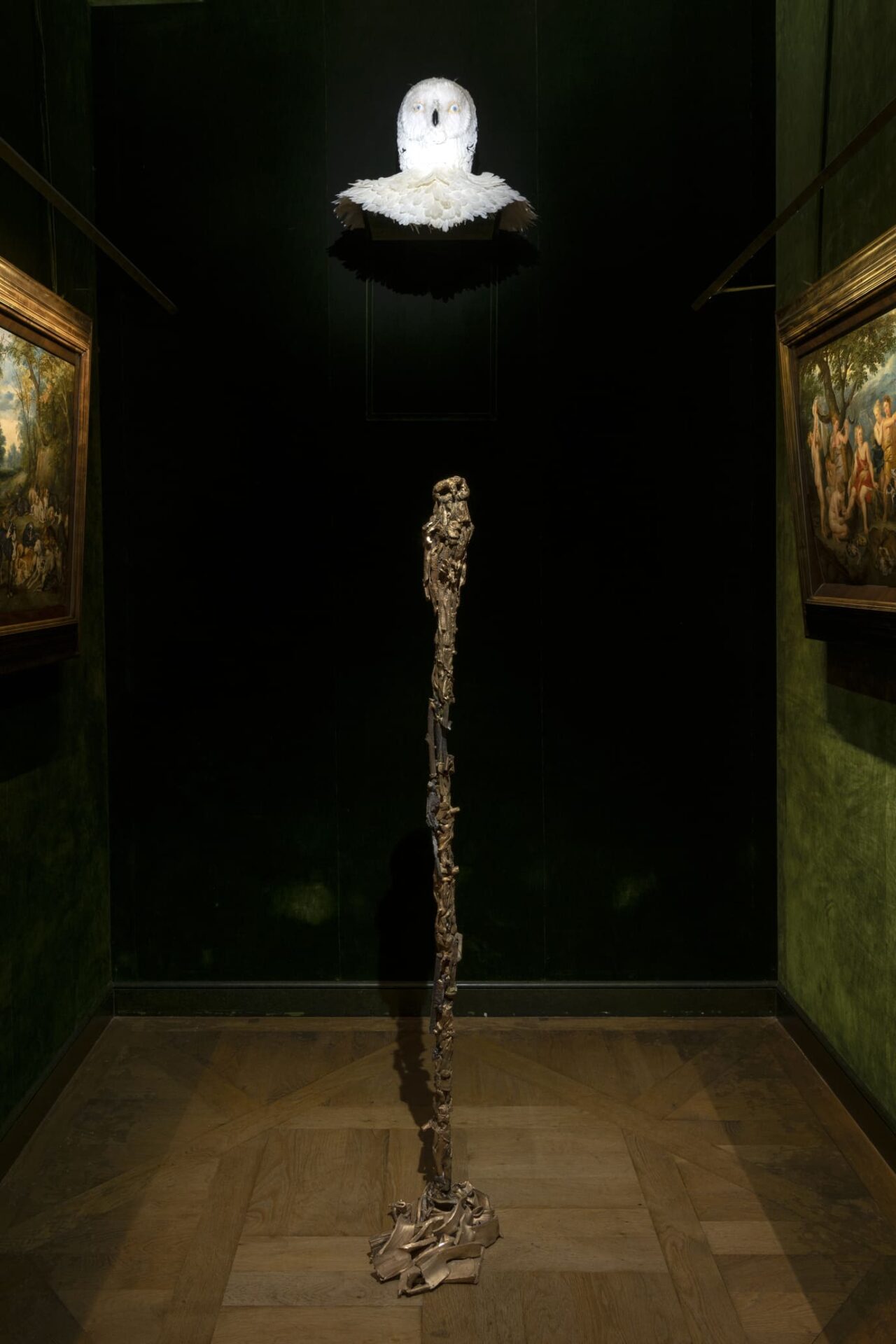
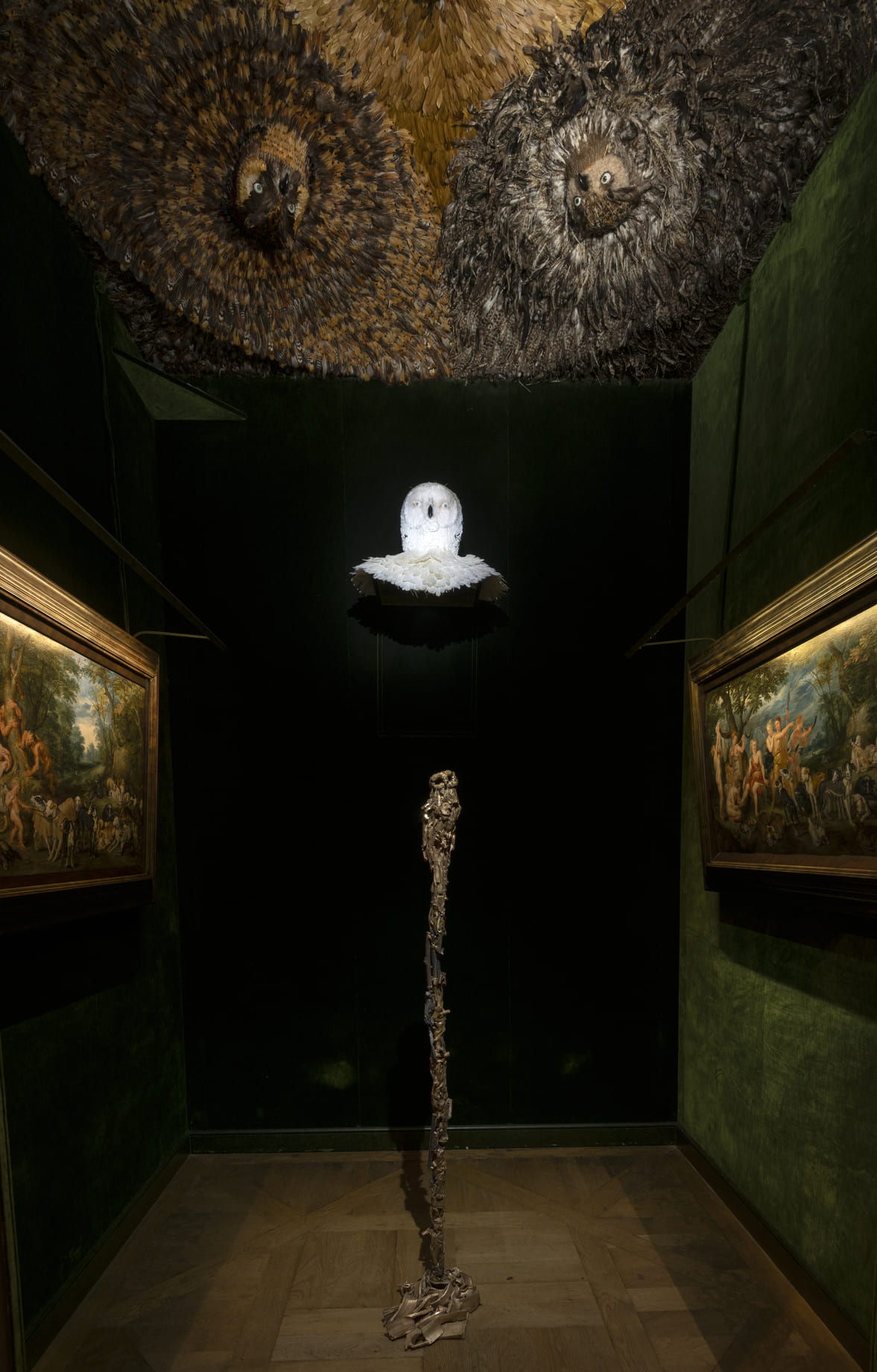
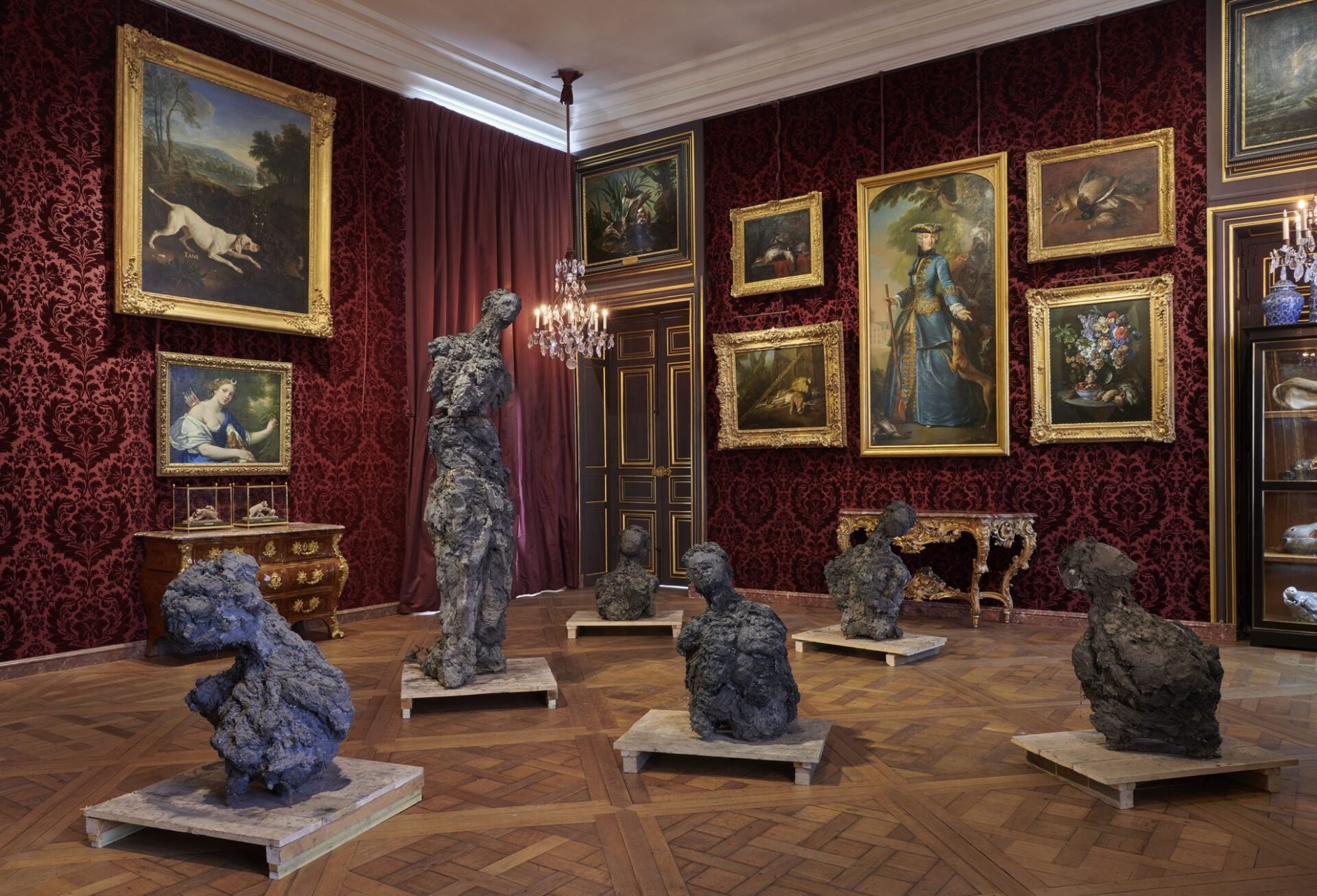
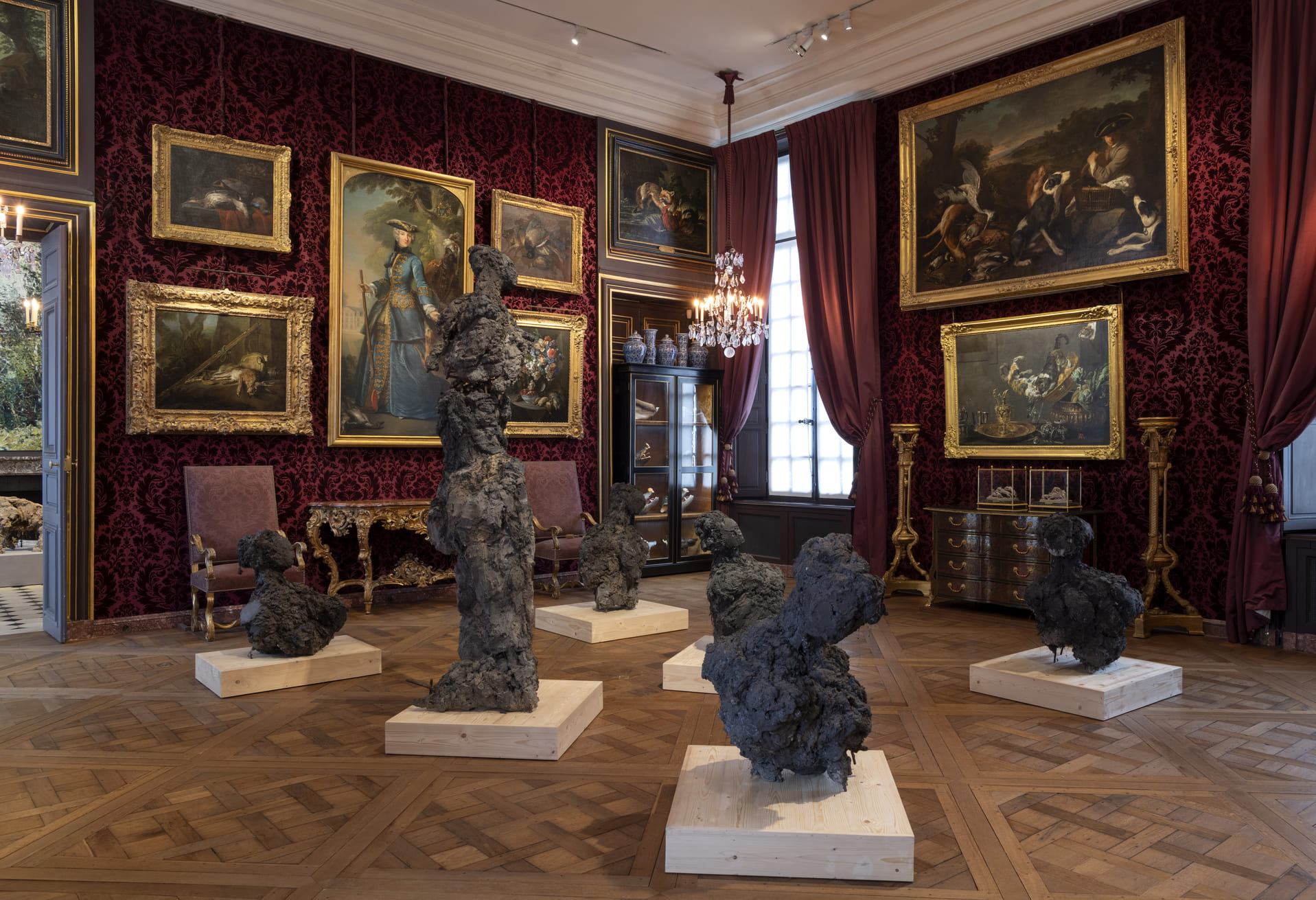
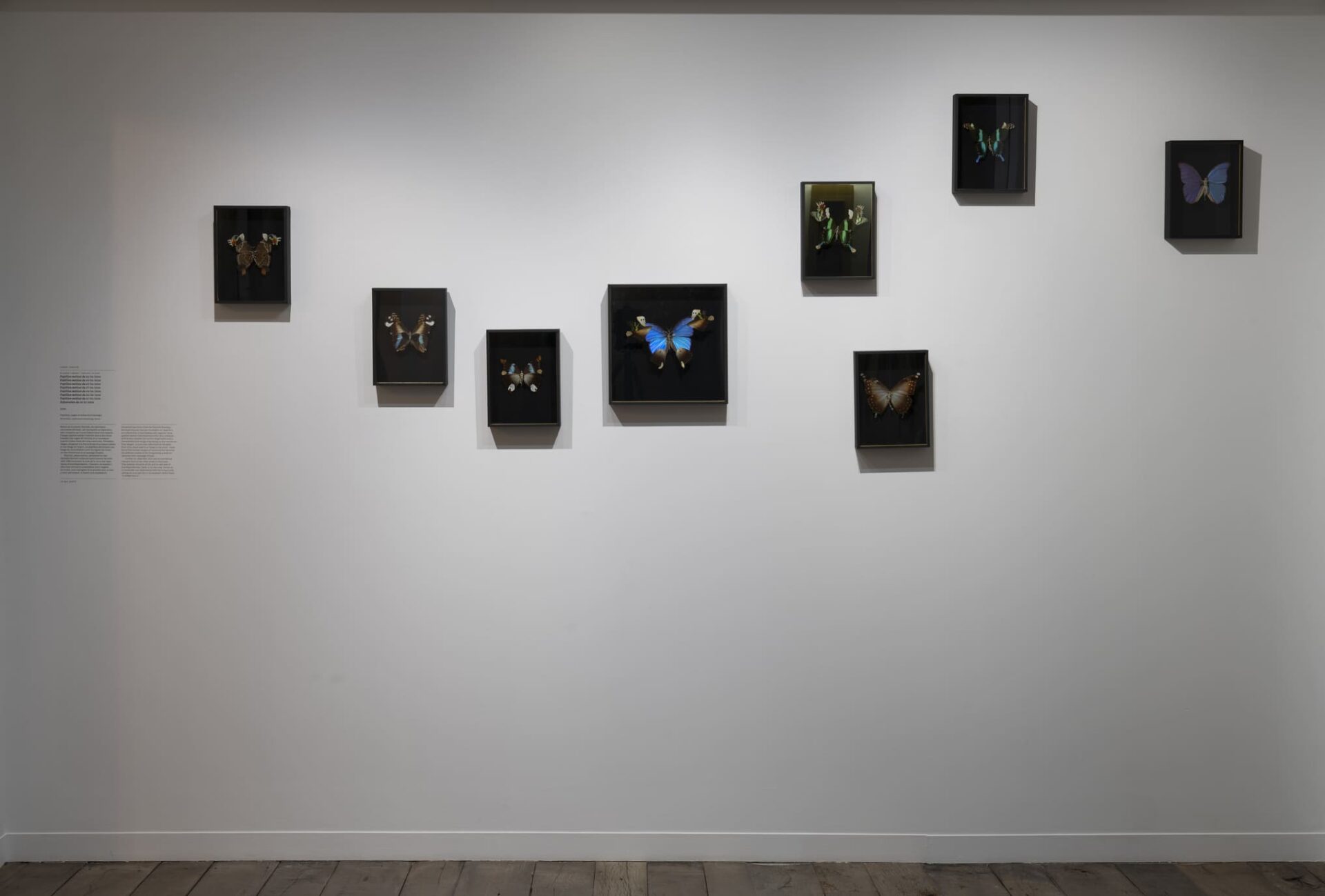
The common thread running through the exhibition is the ambivalence of oxidation—which both destroys and constructs—revealing what underpins the power of this exhibition: an exploration of loss and alteration as a necessity of life. Finally, through hybridisation, Lionel Sabatté’s work allows us to sense an archaic state where kingdoms and species merge, transcending the boundaries between nature and culture. The ‘heads’, a distant echo of classical vanities, become planets and landscapes, just as the fur of the ‘owls’ can become. As for the ‘foetuses’ and ‘chicks’, they take us back to a primordial form where the boundary between animal and human becomes blurred.
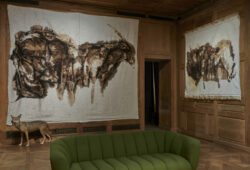
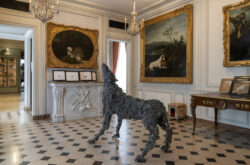
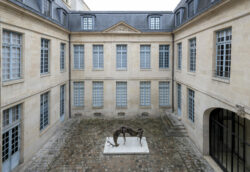
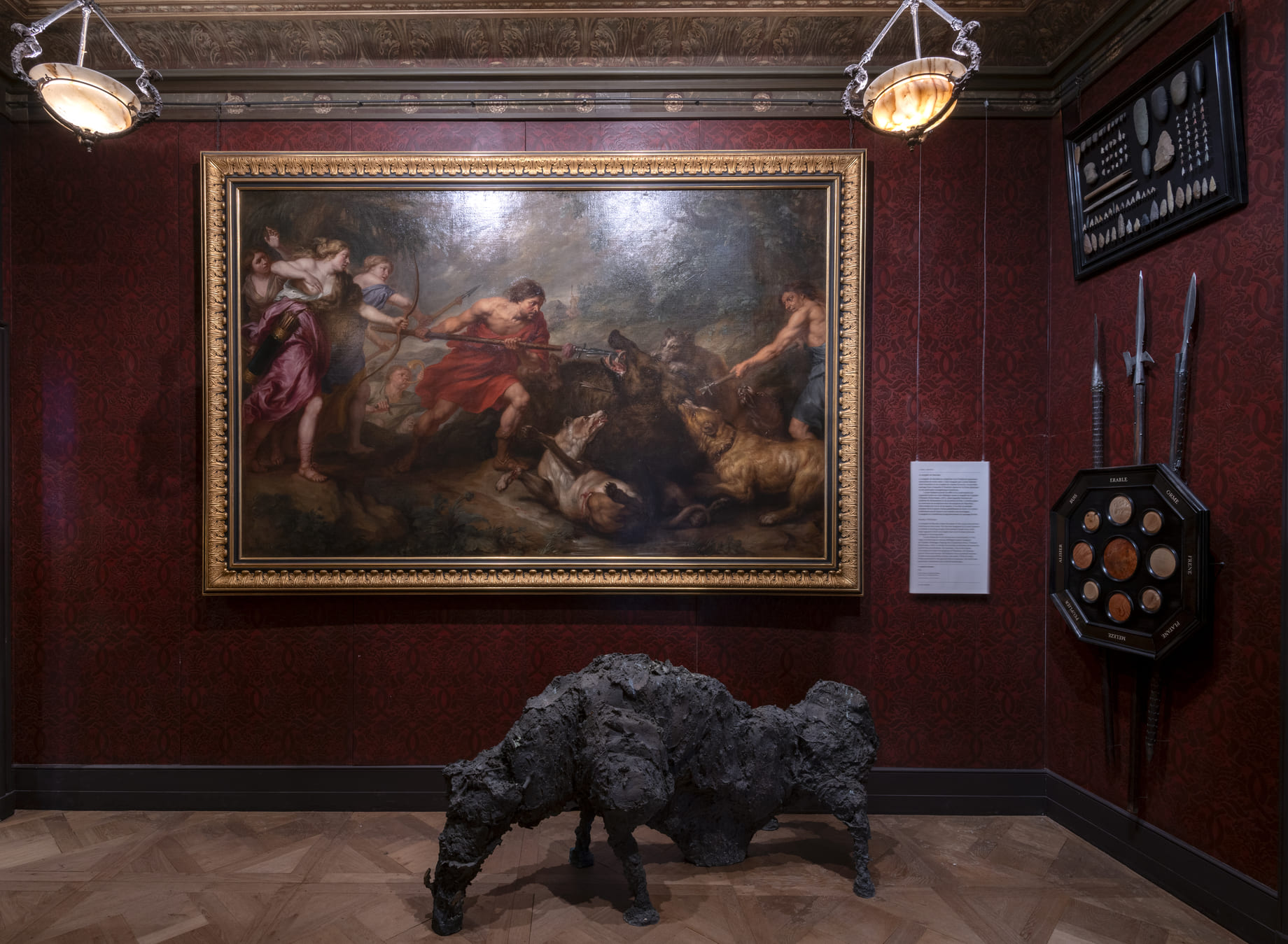
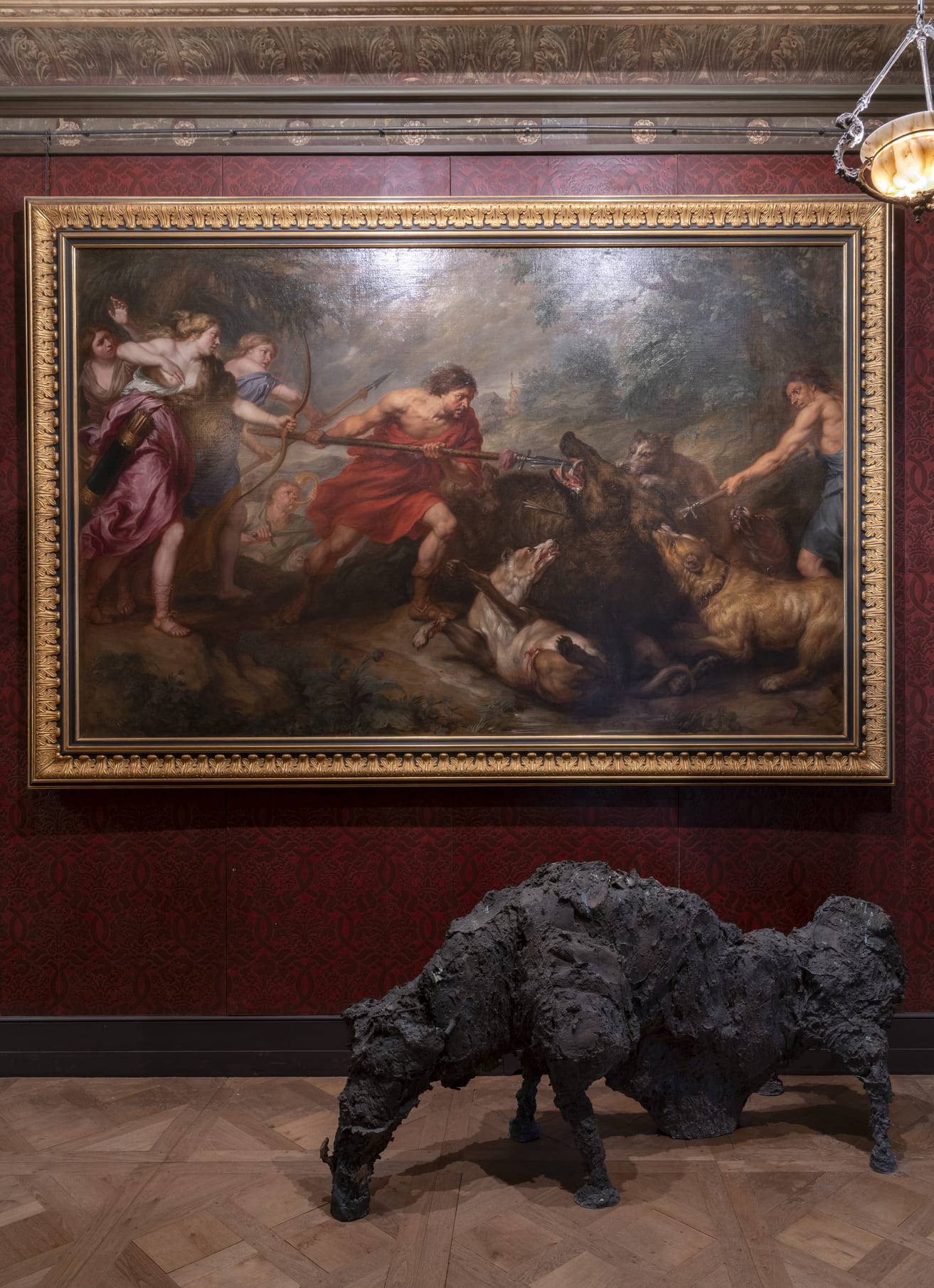
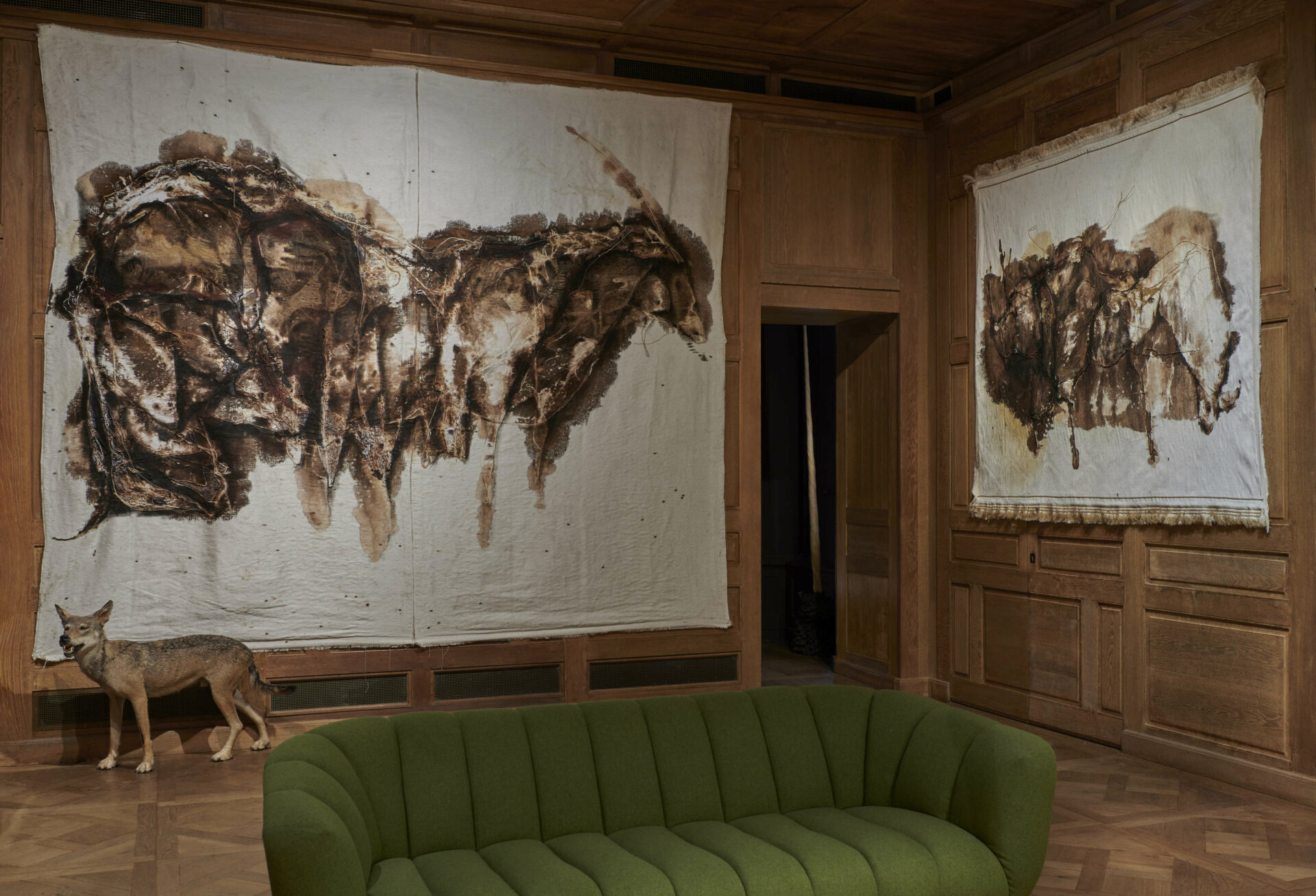
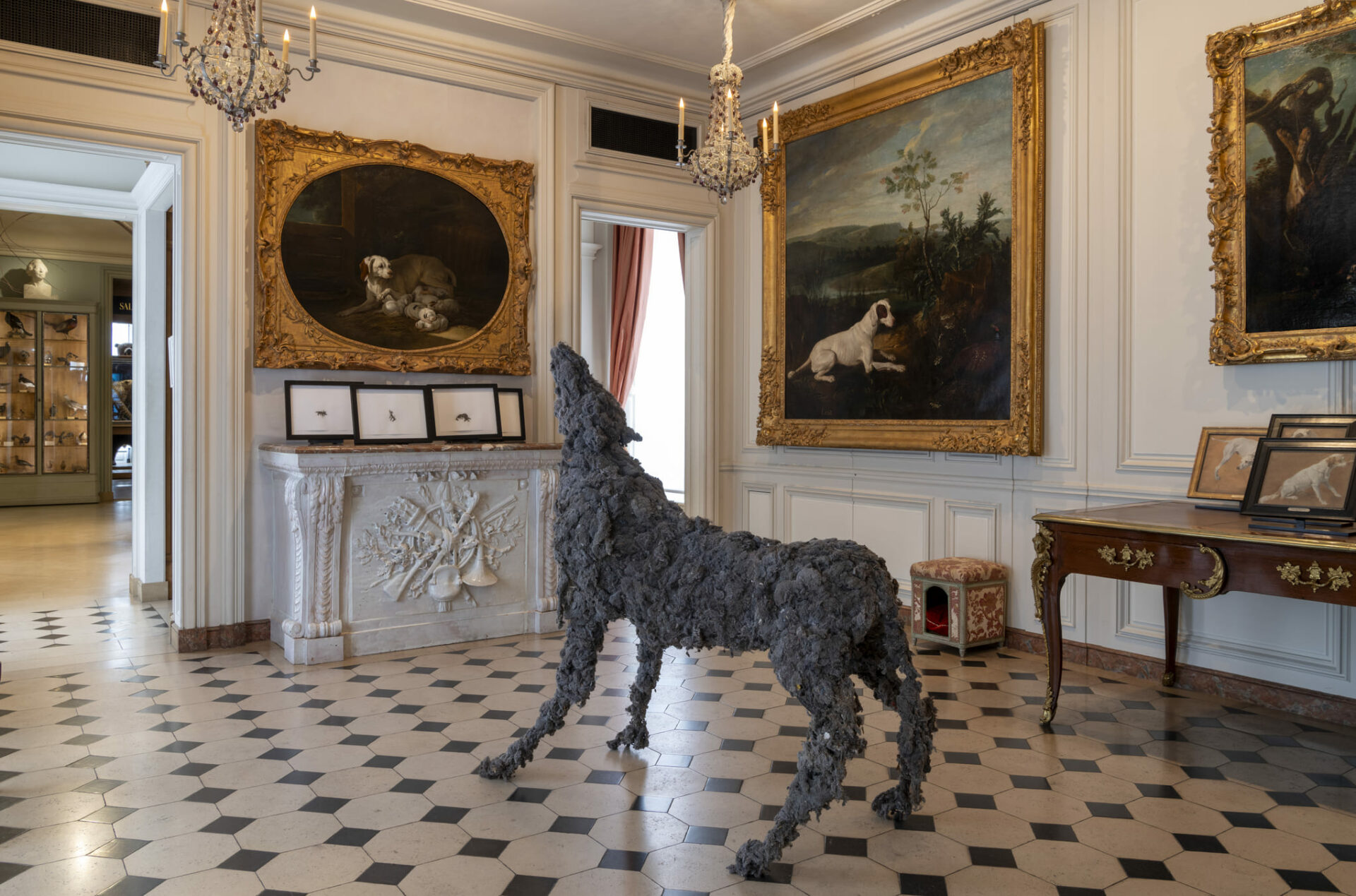
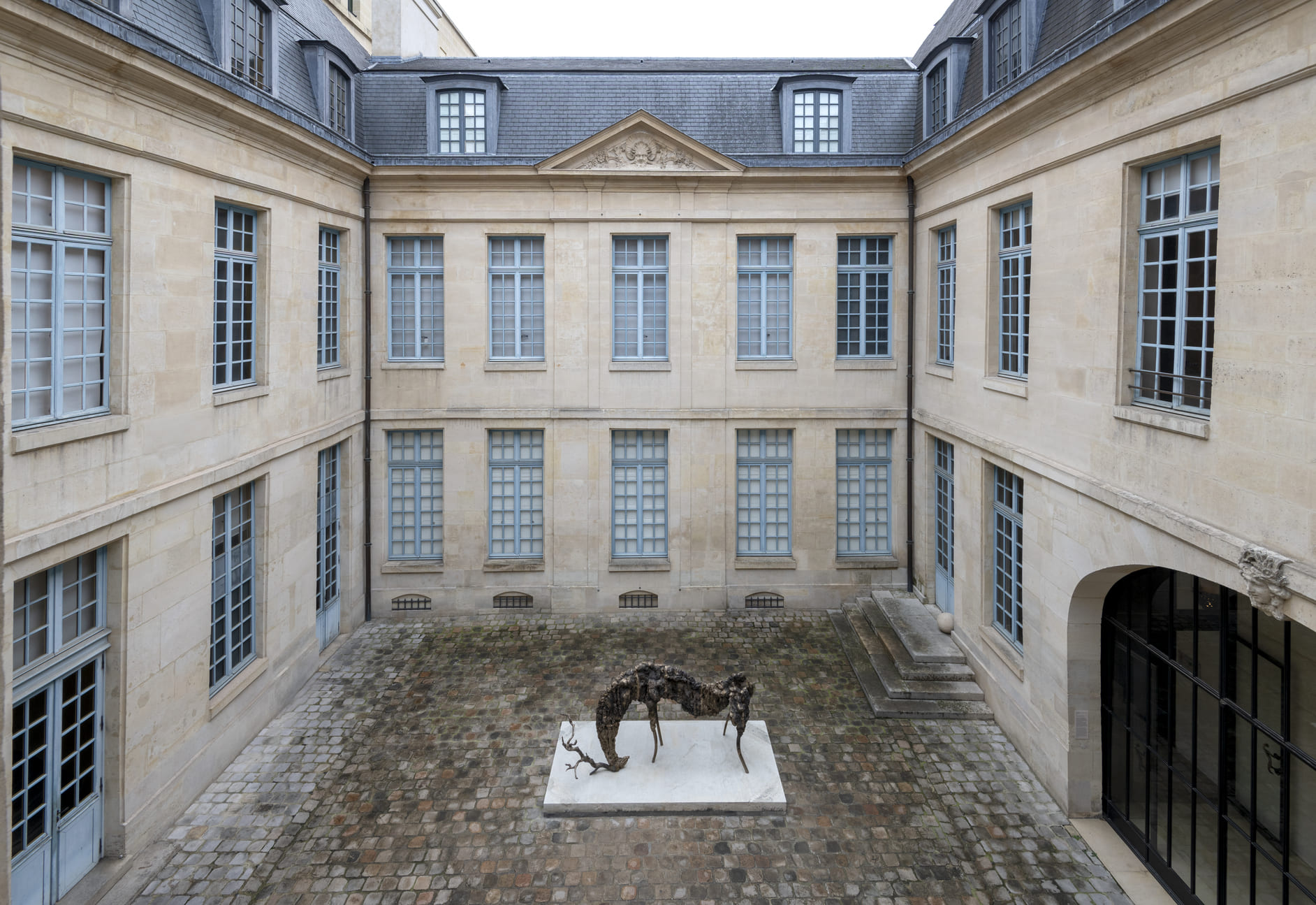
Lionel Sabatté’s art unsettles us and challenges us. It turns our values, our habits and our preconceptions on their head. It re-wilds the domesticated. In his hands, the dog becomes a wolf once more; a flock of sheep is transformed into a wild and fiery lion. Thus the *Pelages*—soiled tapestries with hanging threads—are no longer social markers bearing cultural symbols, but become skins, interlaced with wool and walnut stain, forming a living habitat for the animal figure. A wild figure, difficult to distinguish clearly, glimpsed fleetingly, just as a hunted animal reveals itself only from the corner of the eye.
Lionel Sabatté’s art alters what is produced by human activity and deconstructs the very foundations of our culture. Is the glorious edifice of progress and consumerism a construction or a ruin of life itself? Made of frayed thread, crumbling fragments, cement and dust, can our bodies, our knowledge and our so-called civilised shelters still hold? To be reborn in a different way? From what inner vantage point, from what fragile structure, do we observe life? Are we the hunter? The hunted beast? Are we blinded by too much useless knowledge? Can we see the life moving outside in a different light? To see in the night, to face the beast lurking deep within ourselves?